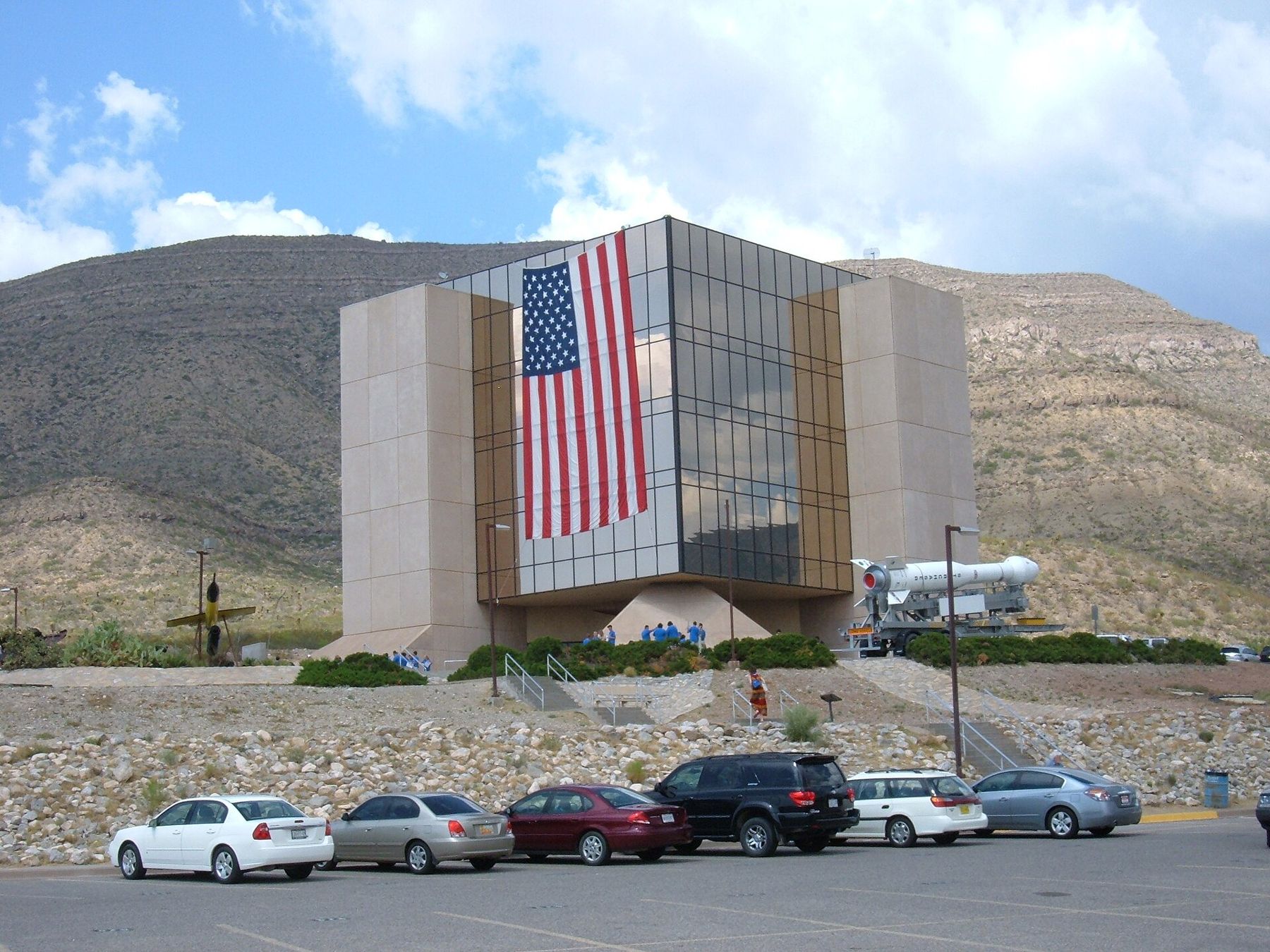
Drive into Alamogordo from the south and you will see it from a long way off: a tall, square building of gold-tinted glass set against the bare foothills of the Sacramento Mountains. This is the New Mexico Museum of Space History, a state museum that tells the story of rockets, missiles and human spaceflight from a place where a good deal of that story actually happened.
The Tularosa Basin, wide, flat, sparsely settled and under clear skies, was exactly what the military and scientists wanted in the middle of the twentieth century. Missile ranges, an air base and test facilities grew up around the town. The museum is honest about that mix of science and weaponry, and it makes a good half-day stop on the way to or from White Sands.
Why the desert drew the rockets
The open desert offered space to fly things and room for them to fall. In July 1945 the first atomic bomb was tested at Trinity Site, at the northern end of what is now White Sands Missile Range. Soon after the war, captured German V-2 rockets were brought to the range and launched from the basin, and American engineers learned from them as they built rockets of their own. Missile testing has continued there ever since.
Holloman Air Force Base, just west of Alamogordo, became a centre for research into how human bodies cope with speed, altitude and acceleration. Rocket sleds raced along tracks on the base, and the volunteers who rode them helped show what pilots and astronauts could survive. High-altitude balloon flights from the region carried people to the edge of space before anyone had flown a rocket there. It is a history of real courage, and also of a landscape that was taken over for military use, sometimes with real costs to the ranchers and communities who lived in the basin.
Inside the gold cube
The museum building has several floors of exhibits, and the usual route takes you up to the top and then down through the galleries. Displays cover early rocketry, the work done in the basin, satellites, the race to the moon and the shuttle era, with models, hardware, instruments and spacesuits. The museum also honours a long list of space pioneers from around the world in its International Space Hall of Fame.
A few stories stand out. One is the role of the basin in the shuttle programme: in 1982 the space shuttle Columbia landed on a dry lakebed runway on the missile range, the only shuttle landing in New Mexico, after wet weather closed its usual landing site. Another is Ham, the chimpanzee who flew a suborbital Mercury flight in 1961 before any American astronaut; he spent part of his early training at Holloman and is buried on the museum grounds.
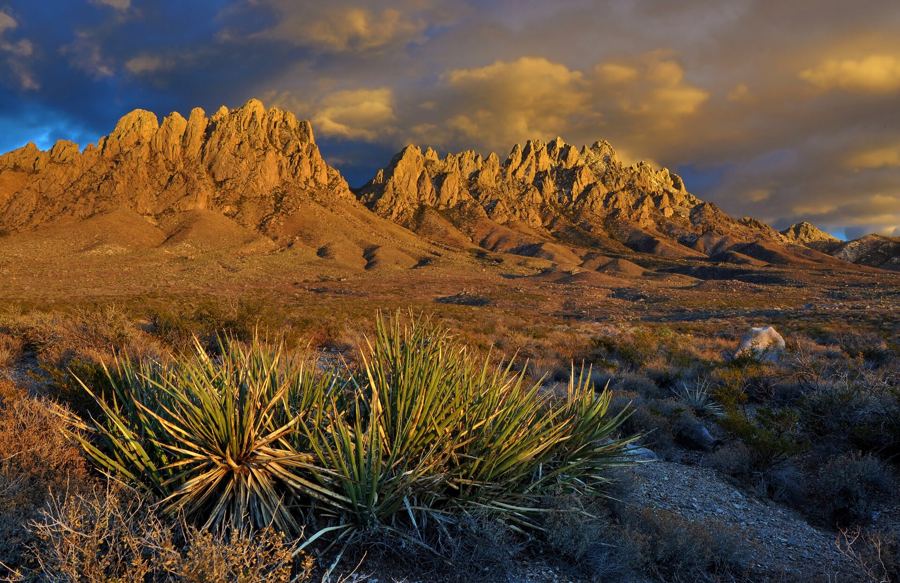 Down another streetThe needles above Las Cruces
Next to the museum is a dome theatre and planetarium that shows films on the night sky and space science. Showtimes and admission arrangements for the museum and theatre change, so check current details before you go; plan two or three hours for the whole site.
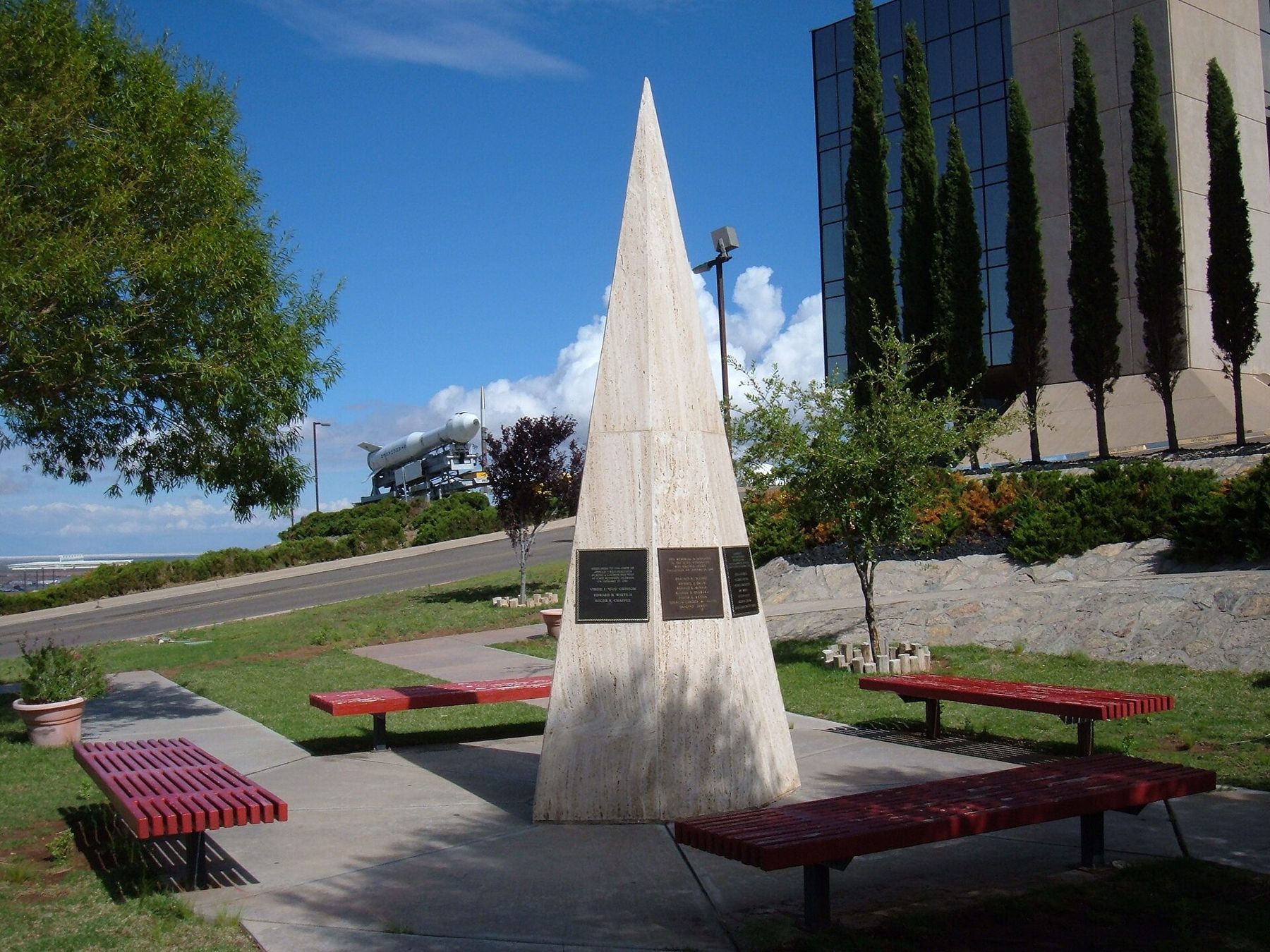
The outdoor rocket park
Do not skip the grounds. Below the main building, an outdoor air and space park displays rockets, missiles, engines and test vehicles set out among the rocks and desert plants. Among them is a rocket sled from the high-speed test track, a reminder of how close to the ground some of the most daring experiments were.
The park is in full sun. In summer, walk it first thing in the morning, before the stone and metal heat up, and save the indoor galleries for the hottest hours.
Nearby, a memorial garden remembers the crews lost in the Apollo 1 fire and the Challenger and Columbia disasters. It is a quiet place among the rocks, with the town and the basin spread out below.
Other stops around town
Alamogordo is a modest town with long, straight streets, and it works well as a base for the east side of the region. A few public places are worth knowing:
- Alameda Park, an old shaded park along the main highway, a pleasant break from the glare.
- Oliver Lee Memorial State Park, a short drive south, with a trail climbing into Dog Canyon in the Sacramento escarpment.
- The road to Cloudcroft, climbing east into pine forest, with overlooks across the basin and much cooler air.
Alamogordo also has an odd footnote in video game history. In 1983, a large load of unsold game cartridges was buried in the town landfill, and the story became a legend until a public dig in 2014 confirmed it. It makes a good tale on the drive, though there is nothing to see at the site now.
Combining it with the dunes
The museum and White Sands make a natural pair. The dunes are a short drive west of town, and the best light there comes early and late, which leaves the middle of the day free for the museum's air-conditioned galleries. If you are driving from Las Cruces, remember that US 70 crosses part of the missile range and can close briefly during tests, and that a Border Patrol checkpoint sits on the same road.
From Alamogordo, the rest of the basin opens to the north, with petroglyphs and lava fields covered in across the Tularosa Basin. For more on the road network and distances, see getting here and around.