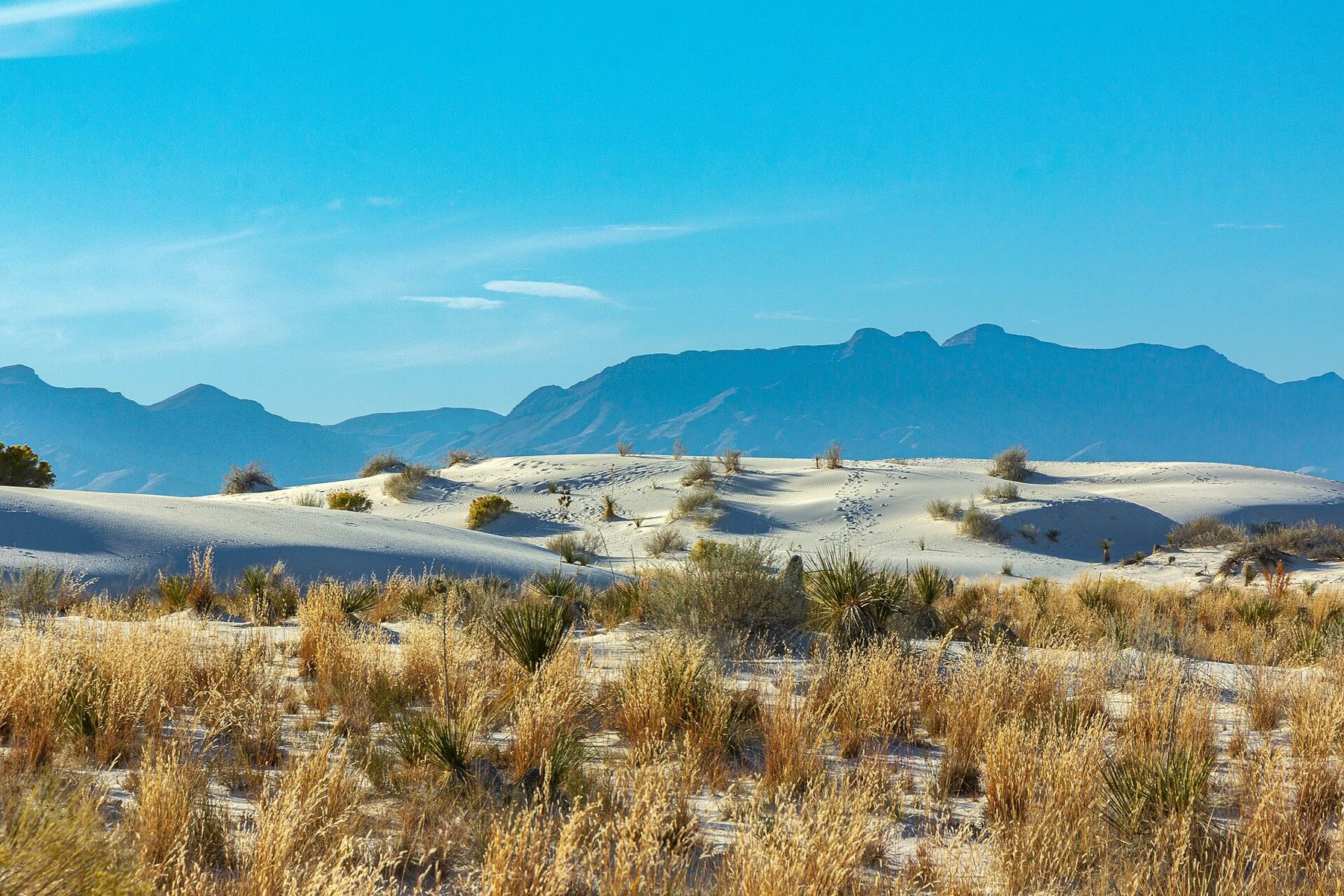
From the top of San Agustin Pass, where US 70 crosses the north end of the Organ Mountains, the Tularosa Basin opens out below you in a single brown sweep. Far off, on the basin floor, there is a pale smear that looks like low cloud or a salt lake. That is White Sands: the largest gypsum dunefield in the world, a sea of white sand covering hundreds of square miles, of which the national park protects a large part.
It is about an hour's drive from Las Cruces and a short hop from Alamogordo. Most visitors come in the middle of the day, when the glare is fierce and the dunes look flat and shadowless. Come at the edges of the day instead. At sunrise and sunset the ripples on every slope stand out in relief, the colours shift by the minute, and the sand is cool under your feet.
Why the sand is white
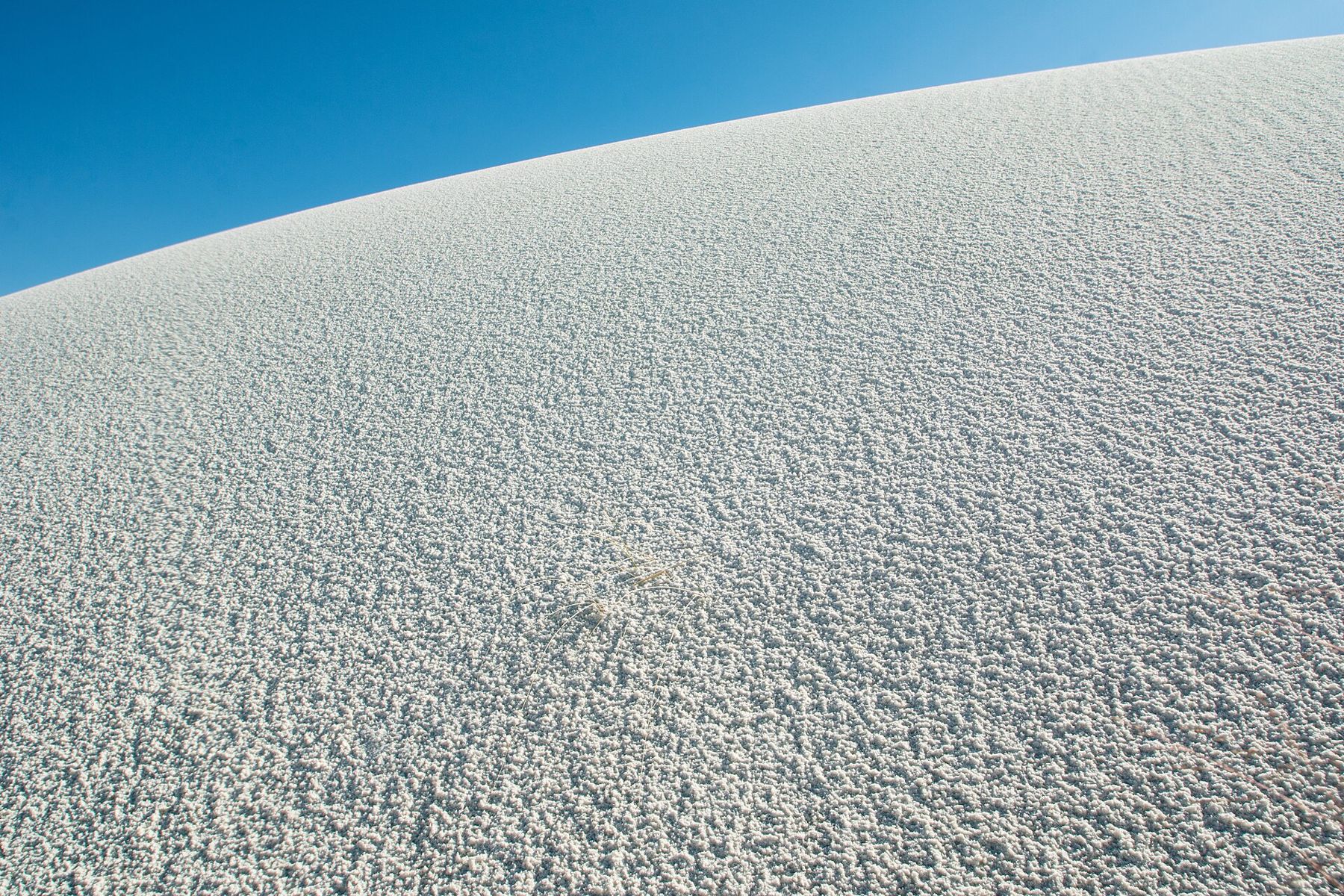
Most desert sand is quartz. White Sands is gypsum, a soft mineral that dissolves in water, which is why you rarely see it as dunes anywhere else; rain usually carries it away to the sea. The Tularosa Basin has no outlet to the sea. Water running off the San Andres and Sacramento mountains carries dissolved gypsum down into the basin and stays there, evaporating and leaving crystals behind on the dry lakebed at the park's western edge. Wind breaks those crystals down into grains and pushes them north-east, building dunes that are still moving today.
Because gypsum reflects most of the sunlight that hits it, the sand stays cooler to the touch than you might expect, even on a hot day. Walking barefoot is a pleasure early in the morning. It does not make the air any cooler, though, and the reflected glare will burn skin and tire eyes fast.
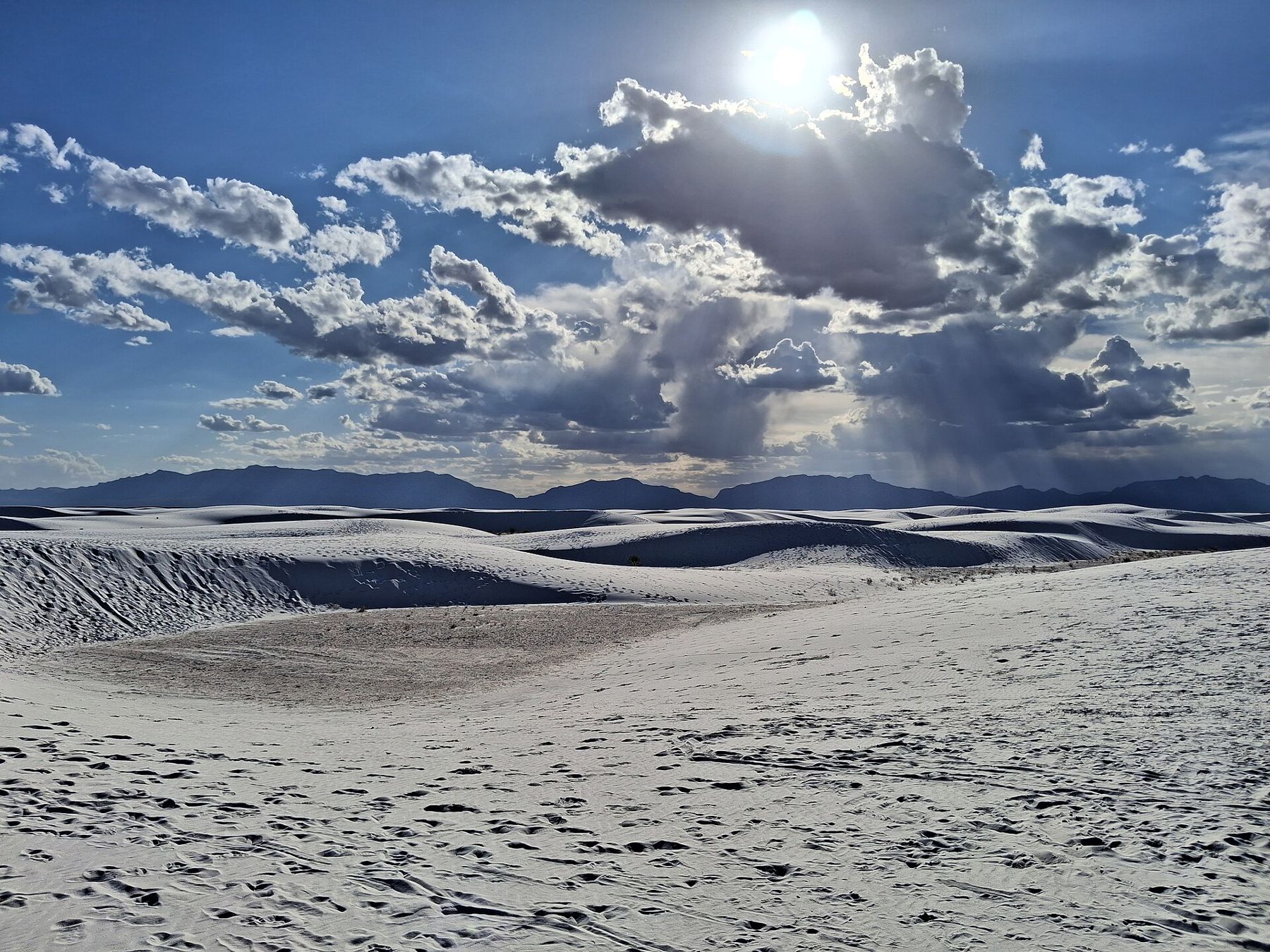
The Dunes Drive at first light
A single scenic road, the Dunes Drive, runs from the visitor center into the heart of the dunefield and loops back. The first stretch is paved. Further in, the road surface is packed gypsum, scraped smooth by ploughs much as a mountain road is cleared of snow, and the white banks on either side heighten the effect. Picnic shelters, parking areas and trailheads line the loop.
The park gate opens and closes at set hours that change with the seasons, and in summer the opening time can fall after sunrise. Check the current hours before you plan a dawn visit. If you cannot be inside at first light, aim for the first hour after opening, when the shadows are still long, and stay until closing for the sunset side of the day. The park has sometimes run special early-entry or full-moon programmes; look for current offerings when you plan.
Come at the edges of the day instead.
Walking, sledding and the trails
You can walk almost anywhere off the road. Climb the nearest dune and the car park disappears within a few minutes; the sense of space is immediate. Sledding down the steeper faces is the classic thing to do here, and waxed plastic saucers are sold at the visitor center. Choose a slope that runs out onto flat sand, not toward the road or a parking area, and expect the first runs to be slow until the wax wears in.
Several marked trails give you more structure:
- The Interdune Boardwalk: a short, level, accessible walk with signs about plants and animals.
- The Dune Life Nature Trail: a loop of about a mile through the edge of the dunes, good for tracks in the early morning.
- The Playa Trail: a short walk to a shallow basin that holds water after rain.
- The Alkali Flat Trail: about five miles round trip over steep dunes to the edge of the old lakebed, marked by posts. It is the most demanding walk in the park.
Trail markers can be hard to see in glare or blowing sand. If you cannot see the next post, stop and go back to the last one rather than guessing.
 Down another streetAcross the Tularosa Basin
Heat, water and the missile range
White Sands looks like snow and behaves like a desert. In summer the air temperature regularly passes 100 degrees Fahrenheit, there is no shade on the dunes, and the sand surface reflects heat back up at you. People have died here, including on the Alkali Flat Trail, after setting off in the heat with too little water. Take at least a gallon per person for a day, more for long walks, and start any serious hike early in the morning. Winter is very different: frosty mornings, cold wind and occasionally snow.
The park also sits inside a working military landscape. White Sands Missile Range surrounds much of it, and when tests are running, both US 70 between Las Cruces and the park and the Dunes Drive itself can close for a period, usually an hour or two. Closures are scheduled in advance and announced; check the park's current notices before you leave. A Border Patrol checkpoint also sits on US 70 west of the park, so carry identification.
Wind is the other hazard. In spring, strong gusts can lift the gypsum into a white-out that cuts visibility and stings the skin. On those days the dunes are more endured than enjoyed, and an earlier start or another day is the better plan. The same winds rework the edges of the dunefield, which is part of what makes the place feel alive.
Sunset, moonrise and the drive home
Many visitors find the evening even better than the morning. As the sun drops behind the San Andres Mountains the dunes turn gold, then rose, and the shadows in the hollows go a deep blue. The road gets busy with people looking for a high dune, so give yourself time to walk away from the car parks. On nights around the full moon, the sand glows faintly after dark, though the gate closing time sets a hard limit on how long you can stay.
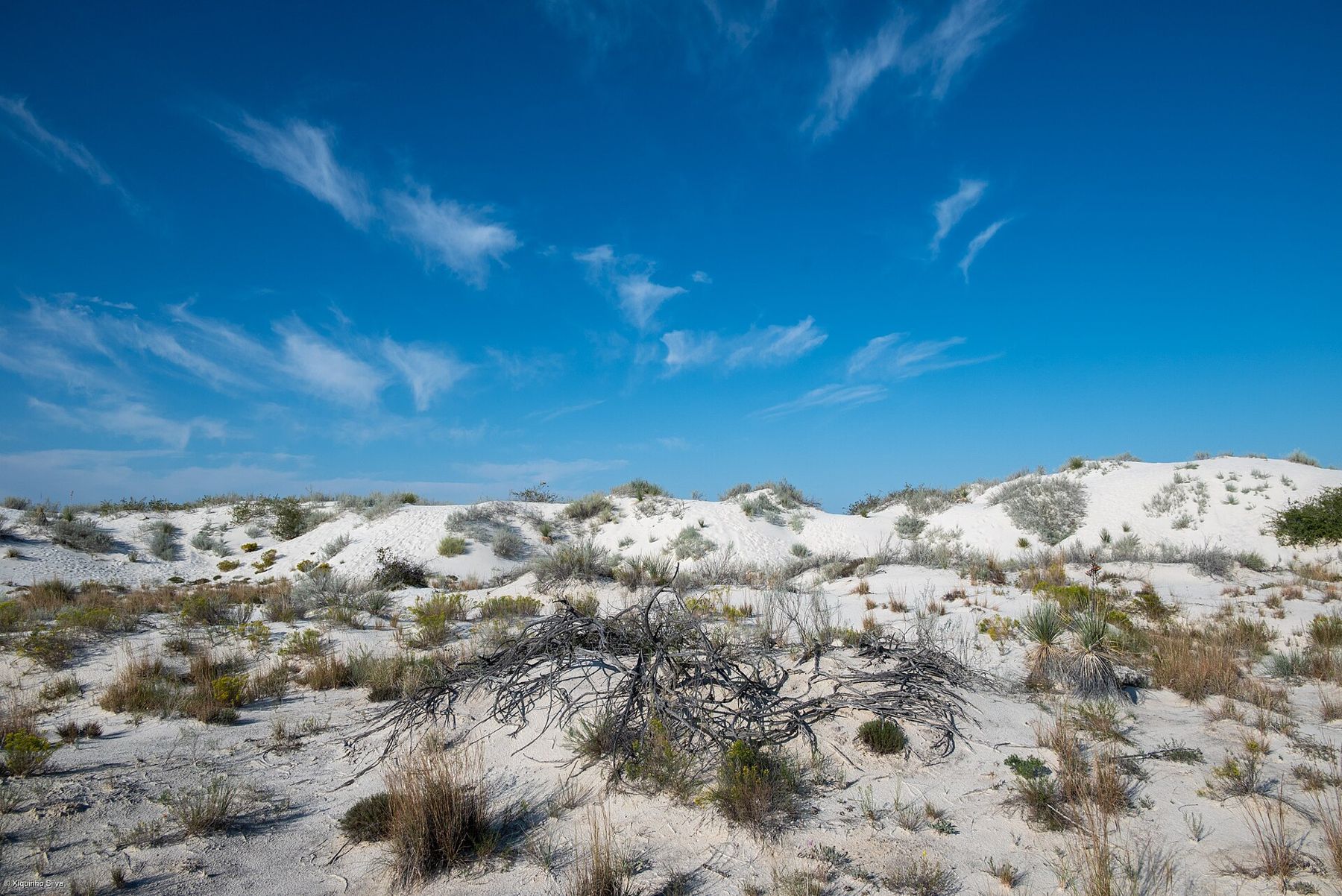
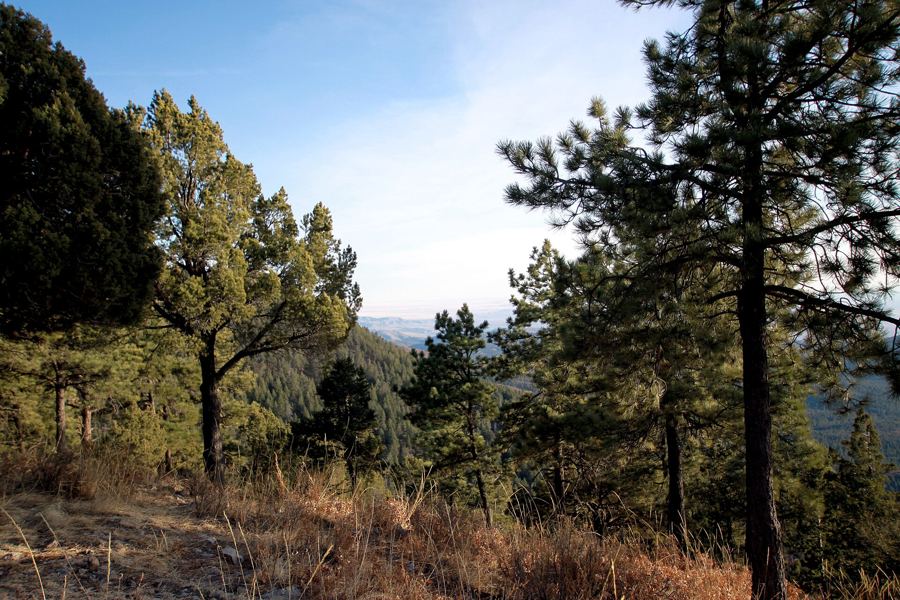
Camping inside the park is limited to a small number of backcountry sites, reached on foot and available by permit only; they are popular, especially around full moons, and they may close during missile tests. Most people stay in Alamogordo or drive back to Las Cruces, a road covered in getting here and around. If you return west at dusk, the Organs ahead of you catch the last light, and the climb back over the pass is a fine finish to the day. The history behind the military landscape you pass through is told in space history in Alamogordo.
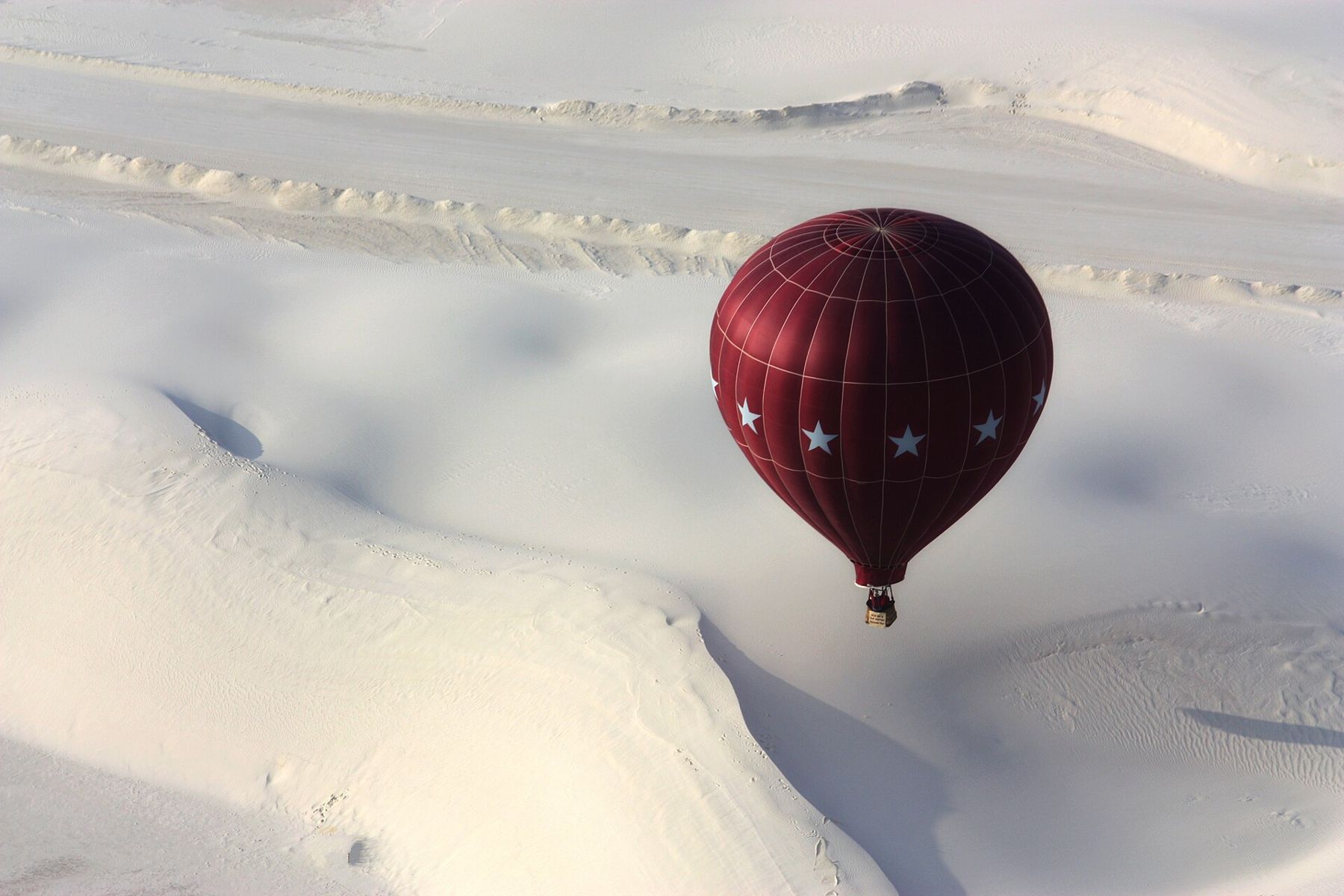
Some autumns the park hosts a balloon rally, with dozens of balloons lifting off over the dunes at dawn. It is one more reason to set the alarm early, and one more event whose dates you should confirm before you go. If you are combining the dunes with the mountains, the trails on the eastern face of the Organs are described in Aguirre Spring on the east face.