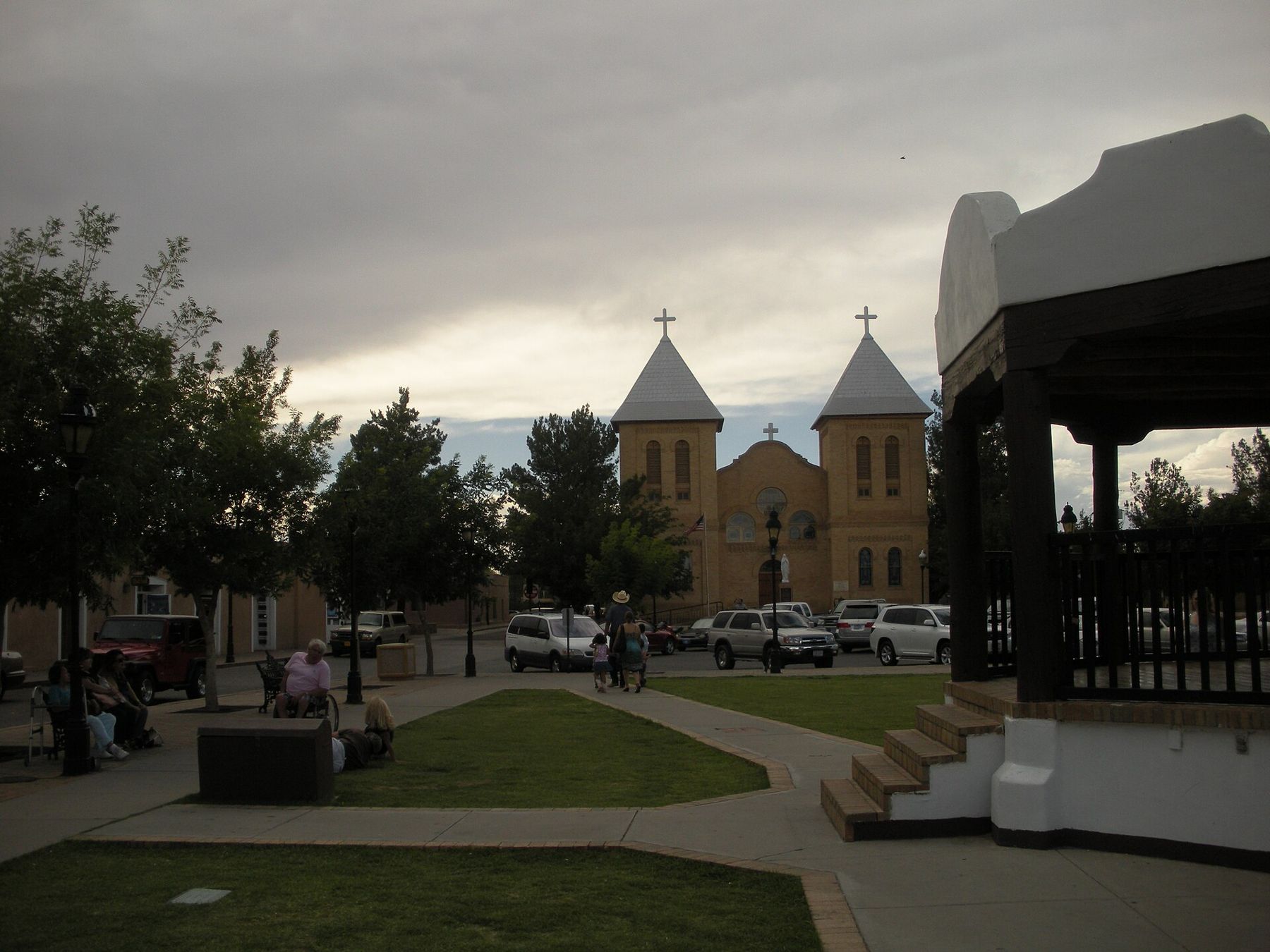
The Mesilla plaza is small enough to cross in a minute and old enough to need an afternoon. A bandstand sits in the middle, the Basilica of San Albino closes the north side, and the other sides are lined with long, low adobe buildings with deep window frames and wooden doors. The town around it, officially Mesilla and widely called Old Mesilla, sits just west of Las Cruces on the flat floor of the Rio Grande valley.
It rewards slowness. Walk around it, sit for a while, read the historic markers, step into the basilica, then walk a few blocks out to see how quickly the town turns residential. This is a working village, not an open-air museum, and the best days here are the unhurried ones.
The square and its bandstand
Start in the middle. The bandstand, or kiosco, is an octagonal wooden structure on a white base, and the panel on its crest carries the crossed flags of the United States and Mexico. Those two flags are the key to the whole place. Mesilla has belonged to both countries, and that double history is painted right over your head.
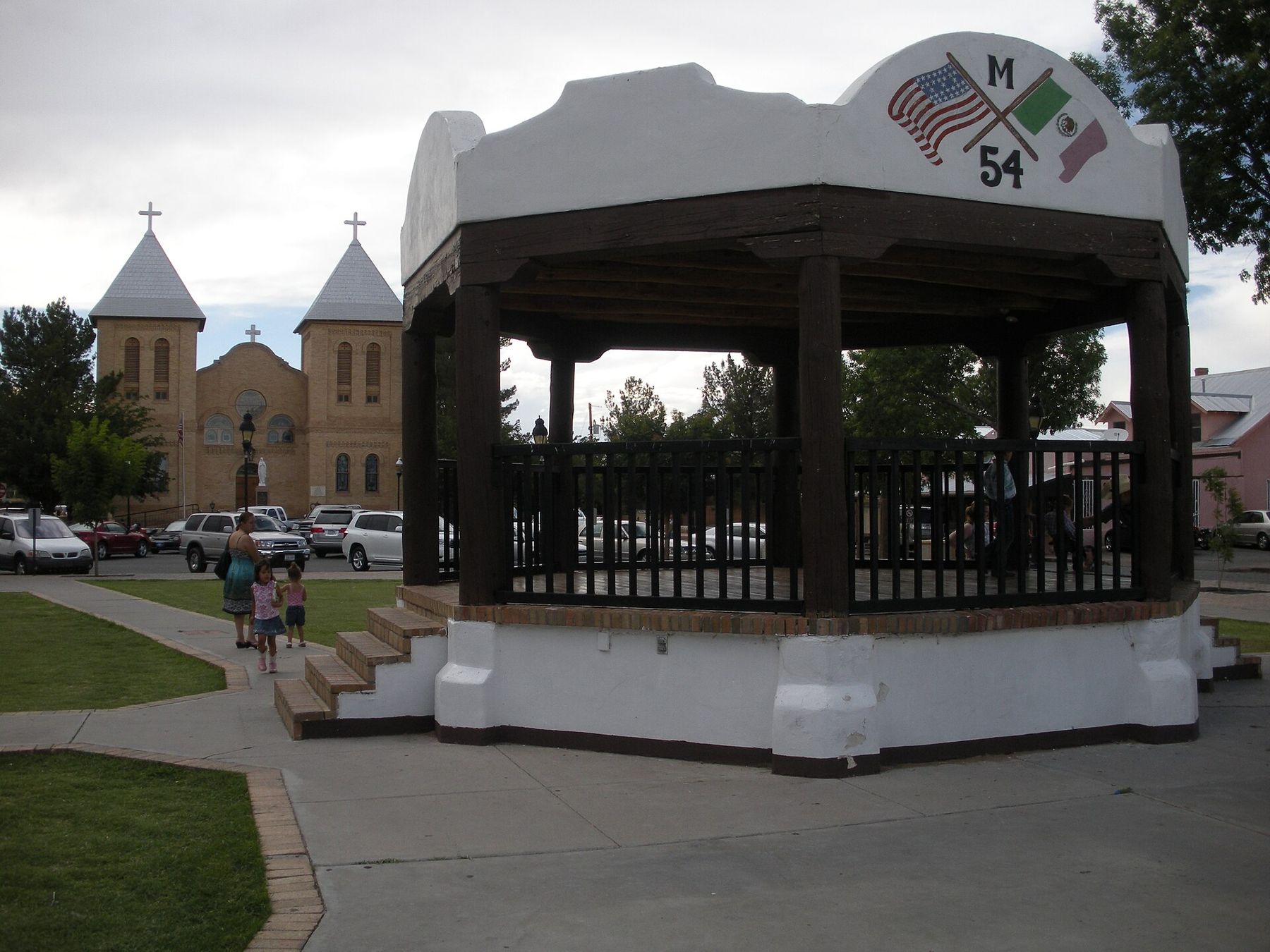
Around the bandstand the plaza is laid out in grass and brick paths, with benches under shade trees. On a weekday morning it is mostly quiet: someone walking a dog, a couple of visitors with coffee, a delivery van. On weekends and during festivals, music returns to the bandstand and the square fills. Several fiestas through the year use the plaza, including celebrations around Mexican Independence Day in September and Day of the Dead in early November; dates and programs vary, so check before you plan around one.
The Basilica of San Albino
The church at the north end has served Mesilla since the town's first years. The parish was founded around 1850 and the earliest church was built of adobe. The present building, in buff brick with two square towers and pointed roofs, dates from the early twentieth century. In 2008 it was designated a minor basilica,.
If the doors are open and no service is under way, you are usually welcome to step in quietly. The interior is calm and full of color from the stained glass, and the cool air is a relief on a hot afternoon. Dress modestly, keep your voice low, and treat it as what it is, a parish church first. Mass times, weddings and funerals take priority over visitors.
How a Mexican village became an American town
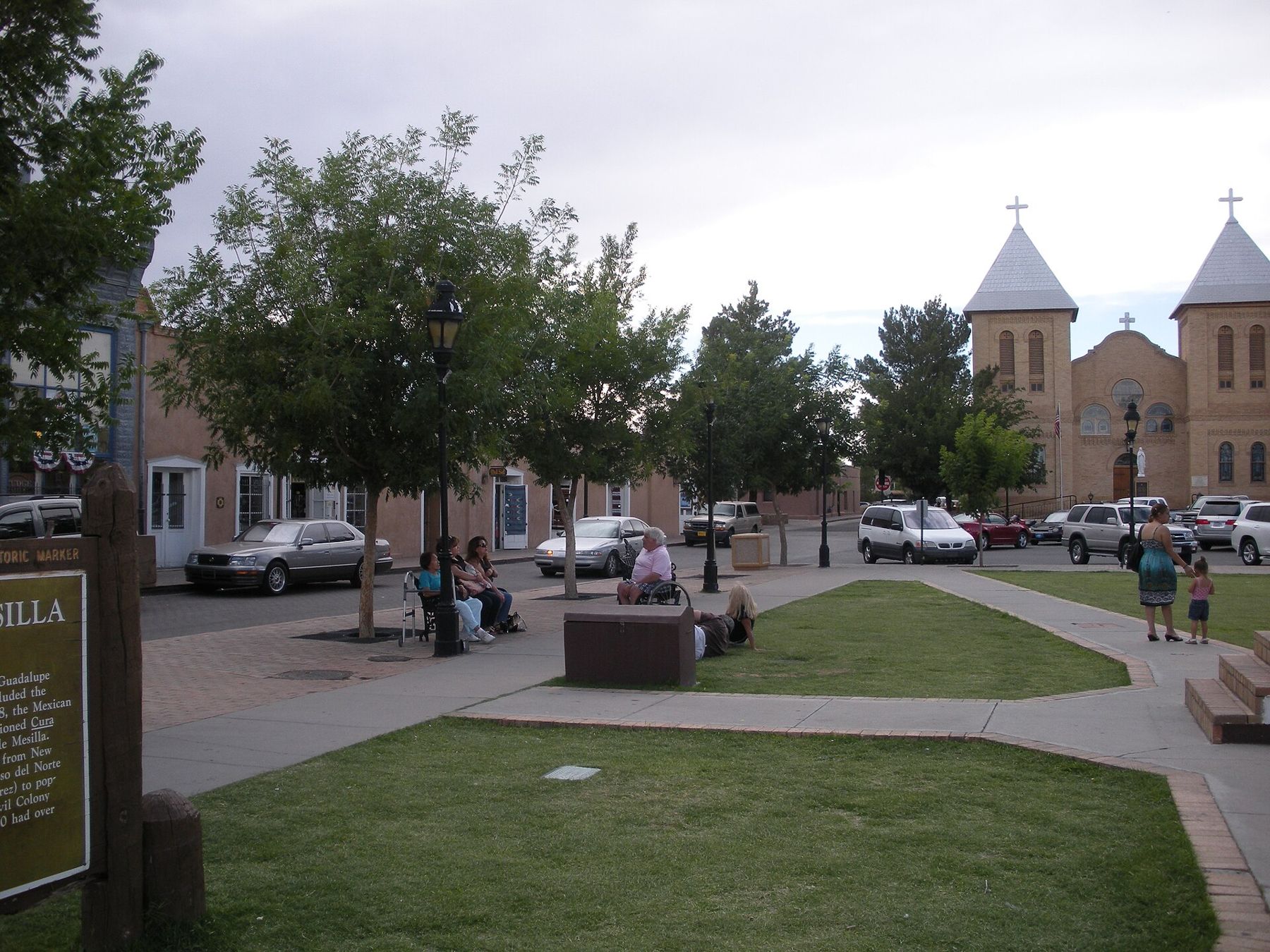
Mesilla's story turns on a border. After the war between the United States and Mexico ended in 1848, the Treaty of Guadalupe Hidalgo placed the land east of the Rio Grande here in the United States. Mesilla, then on the west side of the river, stayed in Mexico, and many of its first settlers were families who had chosen to remain Mexican citizens.
That did not last. In the Gadsden Purchase, signed at the end of 1853 and ratified in 1854, the United States bought a strip of land south of the Gila River and west of the Rio Grande, mostly to secure a southern railway route. Mesilla came with it. The transfer was formally marked here on the plaza in 1854, and the town has been American ever since, with its Mexican roots still visible in its names, its food, its church and its plaza.
 Down another streetSaturday morning on Main Street
More history followed quickly. Mesilla became an important stop on stage and freight routes across the Southwest. In 1861, early in the Civil War, Confederate troops took the town, and it was proclaimed the capital of a Confederate Arizona Territory; Union forces from California regained control the following year. In 1881 Billy the Kid was tried here and sentenced to hang. He escaped weeks later from the courthouse in Lincoln before the sentence could be carried out.
The same years brought the event that changed Mesilla's fortunes most. When the railroad arrived in the valley around 1881, it passed through Las Cruces instead. Las Cruces grew into the region's city; Mesilla stayed a village, and that is a large part of why so much of the old plaza survives. For a fuller account, read how Mesilla changed countries.
Las Cruces grew into the region's city; Mesilla stayed a village, and that is a large part of why so much of the old plaza survives.
Adobe blocks and side streets
The buildings around the plaza are mostly single-story adobe, plastered in earth tones, with flat roofs, projecting wooden beams, and doors set deep in thick walls. Many are now shops and galleries selling crafts, jewelry, pottery, chile products and souvenirs; quality ranges widely, so browse the way you would anywhere else. Several date from the second half of the nineteenth century, and the plaza and its surroundings are protected as a historic district.
Walk a block or two off the plaza and the town becomes residential very quickly. Streets are named in Spanish, many houses keep walled courtyards, and the yards have cypress, roses and fruit trees watered from the irrigation ditches that run through the valley.
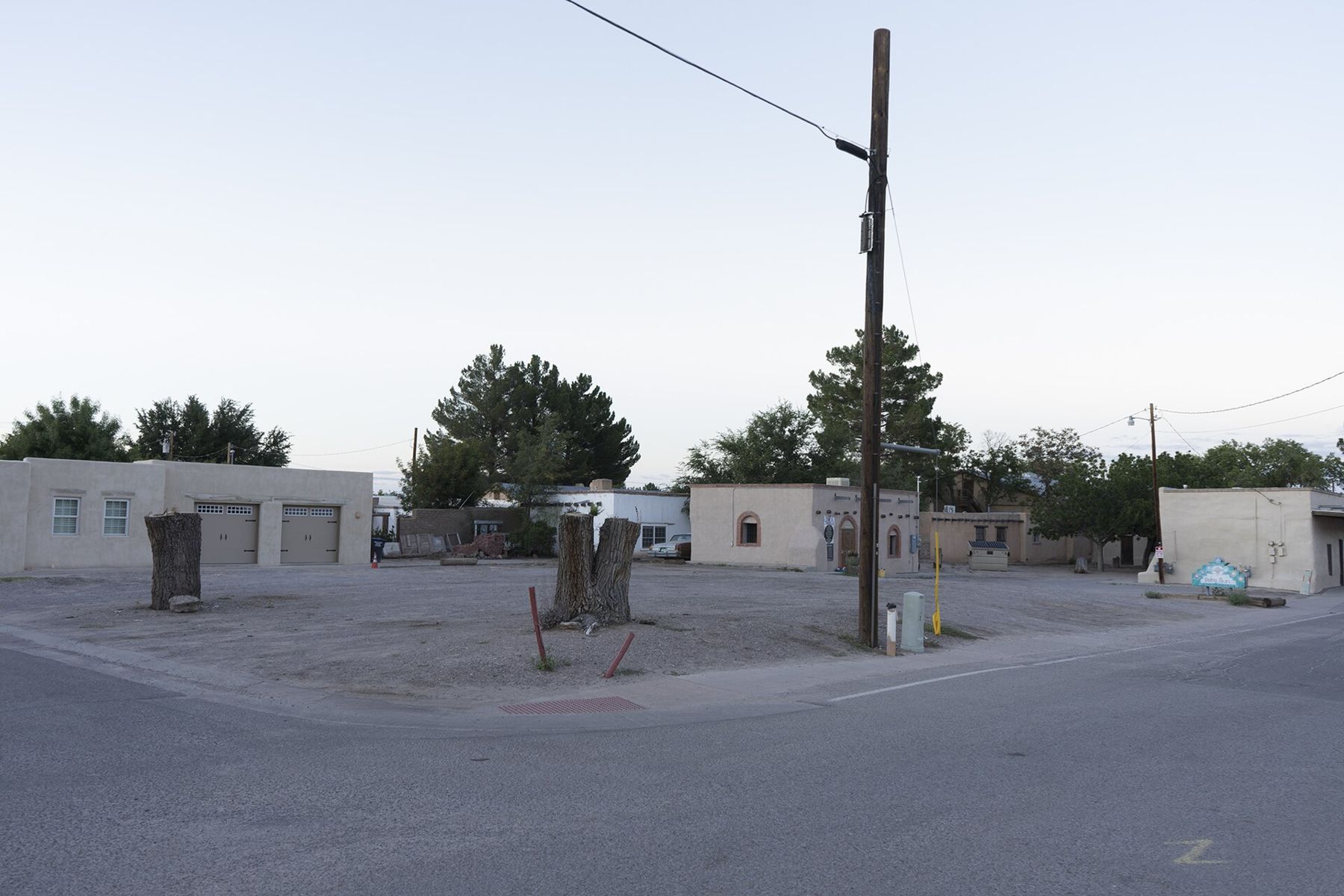
- Look at how the walls are built: thick adobe stays cool by day and gives back warmth at night.
- Watch for canales, the short spouts that carry rainwater off flat roofs.
- Notice the street signs: the old grid around the plaza keeps its Spanish names.
Practical notes for a plaza day
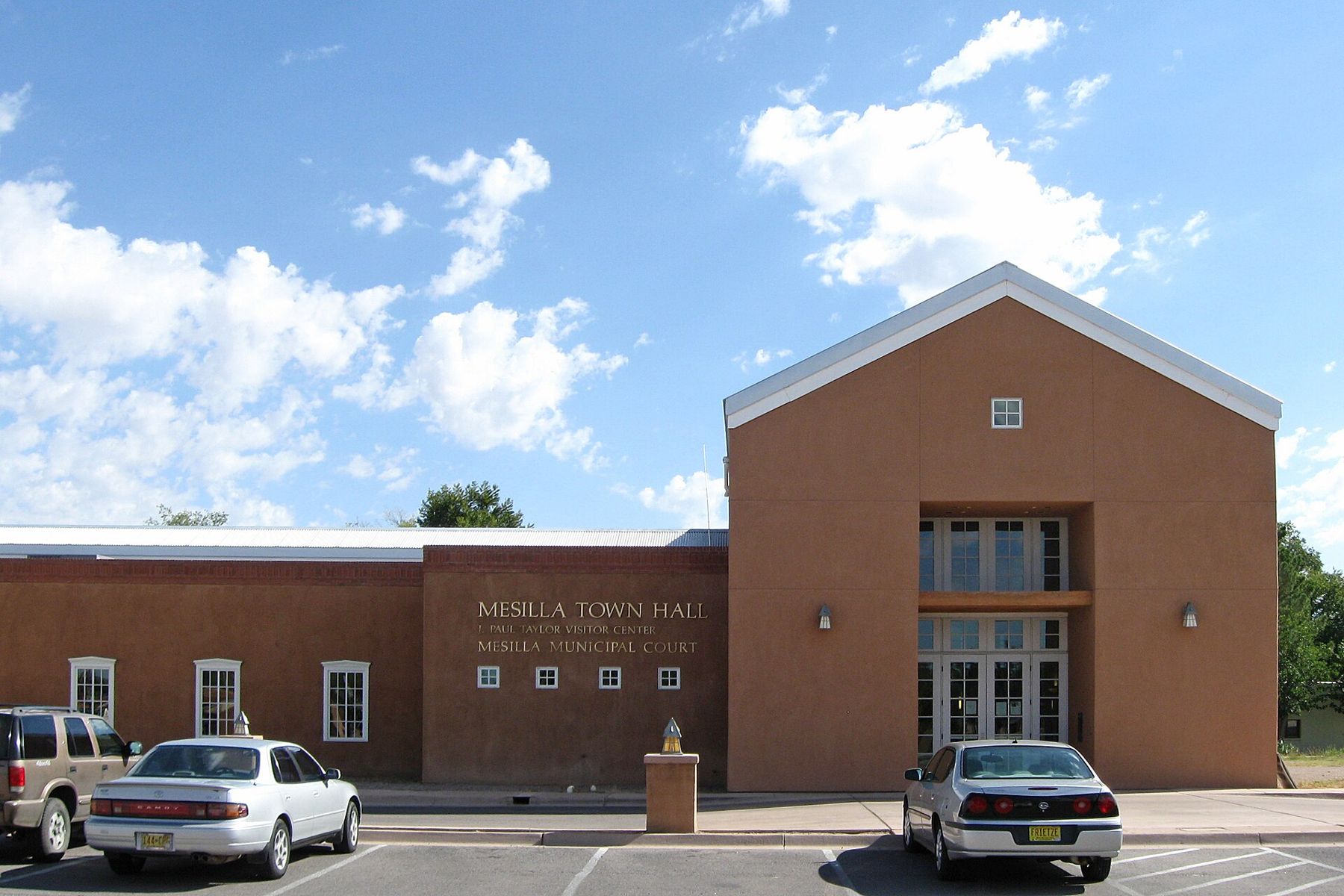
The town hall on Avenida de Mesilla, the main road in from Las Cruces, houses a visitor center where you can pick up a walking map and ask about current events. Parking near the plaza is limited but usually workable on weekdays; on weekends and festival days, expect to park on side streets and walk.
Heat is the main thing to plan around. From late May through September afternoons are hot, and the plaza has limited shade. Come in the morning or late afternoon, carry water, wear a hat, and use the basilica, the museums and the shady benches as breaks. Spring brings wind, sometimes strong enough to carry dust across the valley. October and November are often the kindest months, with warm days, cool evenings and clear light.
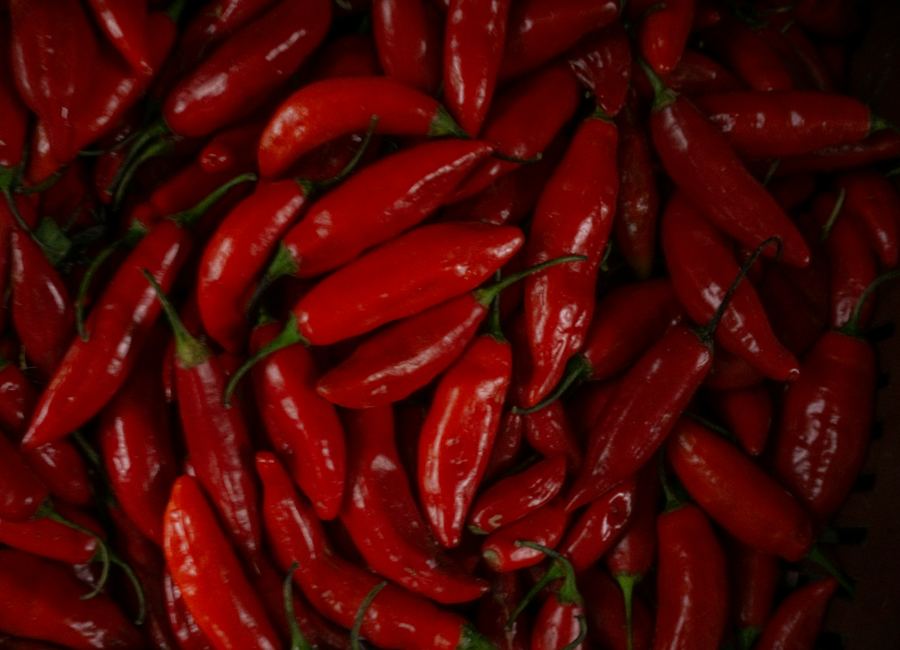
Restaurants and cafes around the plaza serve New Mexican food, and lunch here is a good moment to learn the local question. The story on eating in the Mesilla Valley explains it. And if you come back in late December, the same square looks very different: see the Mesilla plaza on Christmas Eve.
Stay until late afternoon if you can. When the sun drops toward the West Mesa, the adobe turns a deeper color, the heat goes out of the brick, and the plaza feels most like itself.