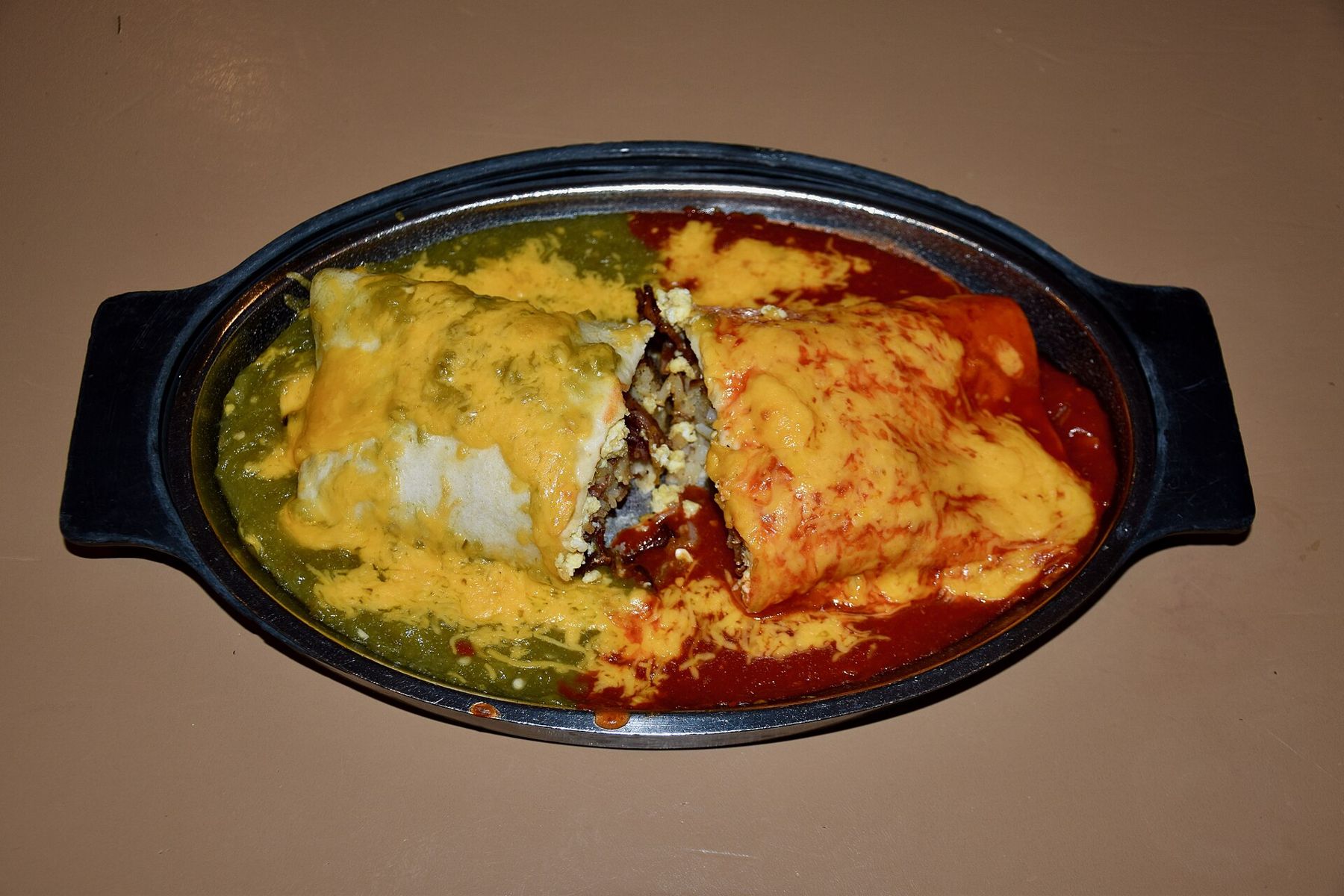
Sit down to a plate of New Mexican food anywhere in the Mesilla Valley and the server will almost certainly ask you a question: red or green? It is not a question about salsa. It is about chile, the sauce that covers enchiladas, burritos, eggs and nearly everything else, and it is so central to the state's identity that the legislature made "Red or green?" the official state question in the 1990s.
The valley around Las Cruces and Mesilla sits at the heart of New Mexico's chile country. Fields stretch north along the Rio Grande to Hatch and the chile harvest, and the state university in Las Cruces has bred and studied chile for more than a century. Eating here is a good way to understand the place.
What red and green actually mean
Red and green chile come from the same plants. The difference is timing.
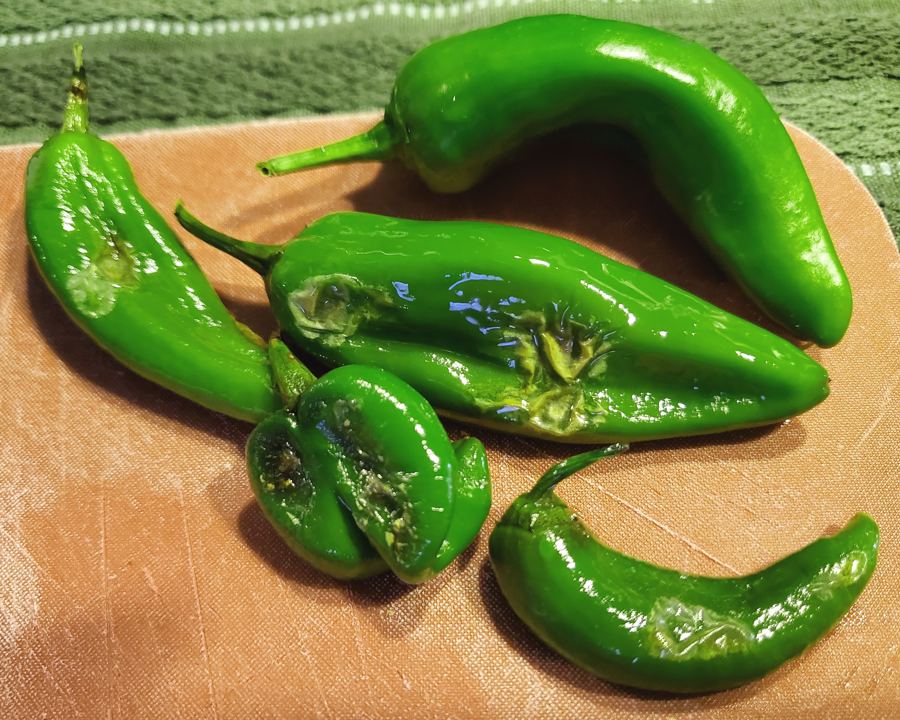
- Green chile is picked before it ripens. The long pods are roasted until the skins blister, then peeled, chopped and cooked into a sauce or stew, often with garlic and sometimes with pork. It tastes bright, smoky and vegetal.
- Red chile is left on the plant until the pods turn red, then dried. The dried pods, or powder ground from them, are simmered into a smooth, earthy sauce. Strings of drying red pods, called ristras, hang outside houses across the state.
Neither colour is reliably hotter. Heat depends on the variety and the year, and the same kitchen's green can be mild one week and fierce the next. If you are unsure, ask which is hotter today; servers are used to the question and will answer honestly.
Christmas, and how to order
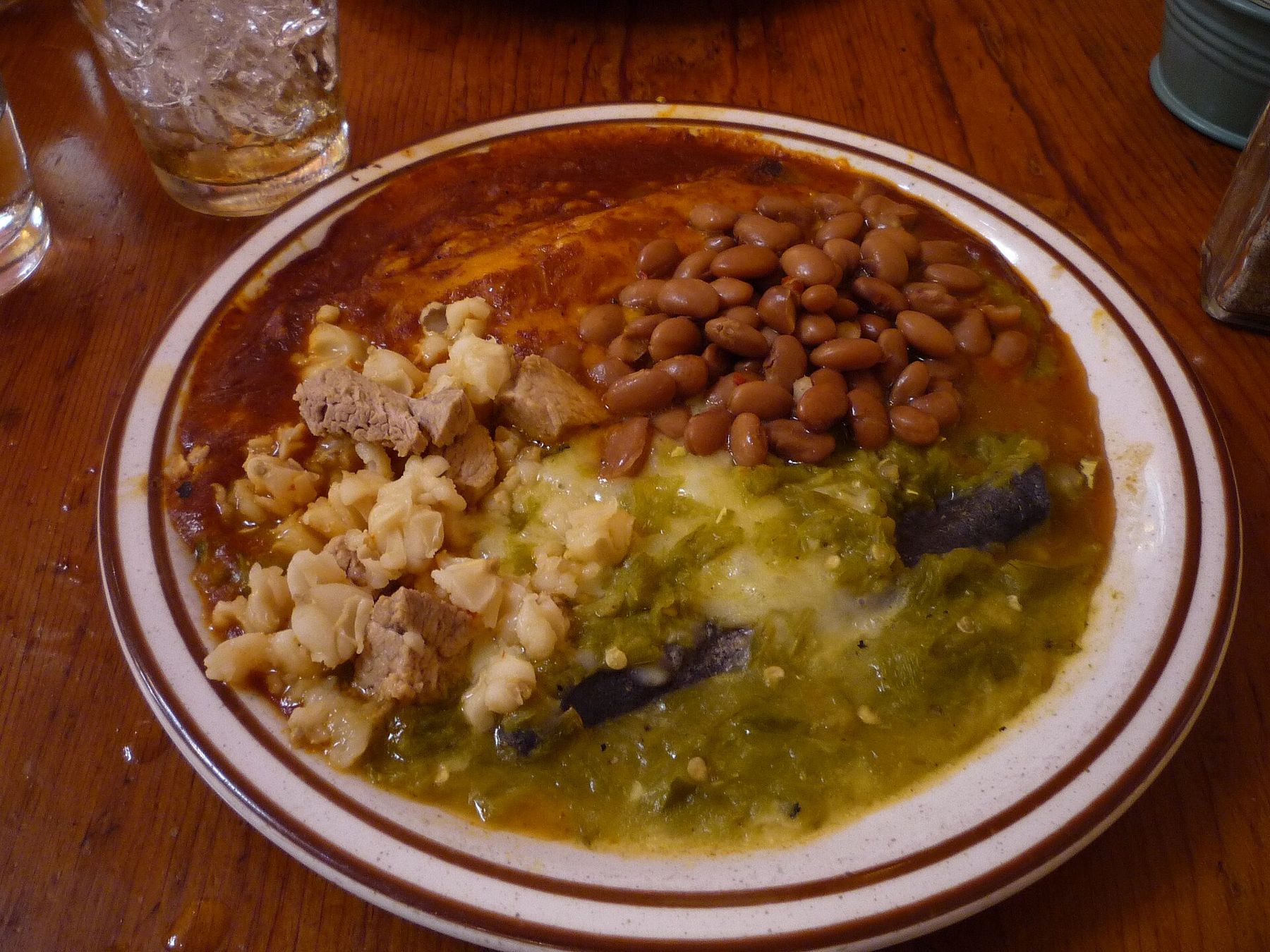
If you cannot decide, say "Christmas". It means half red and half green on the same plate, and it is understood everywhere in the state. A few more terms help:
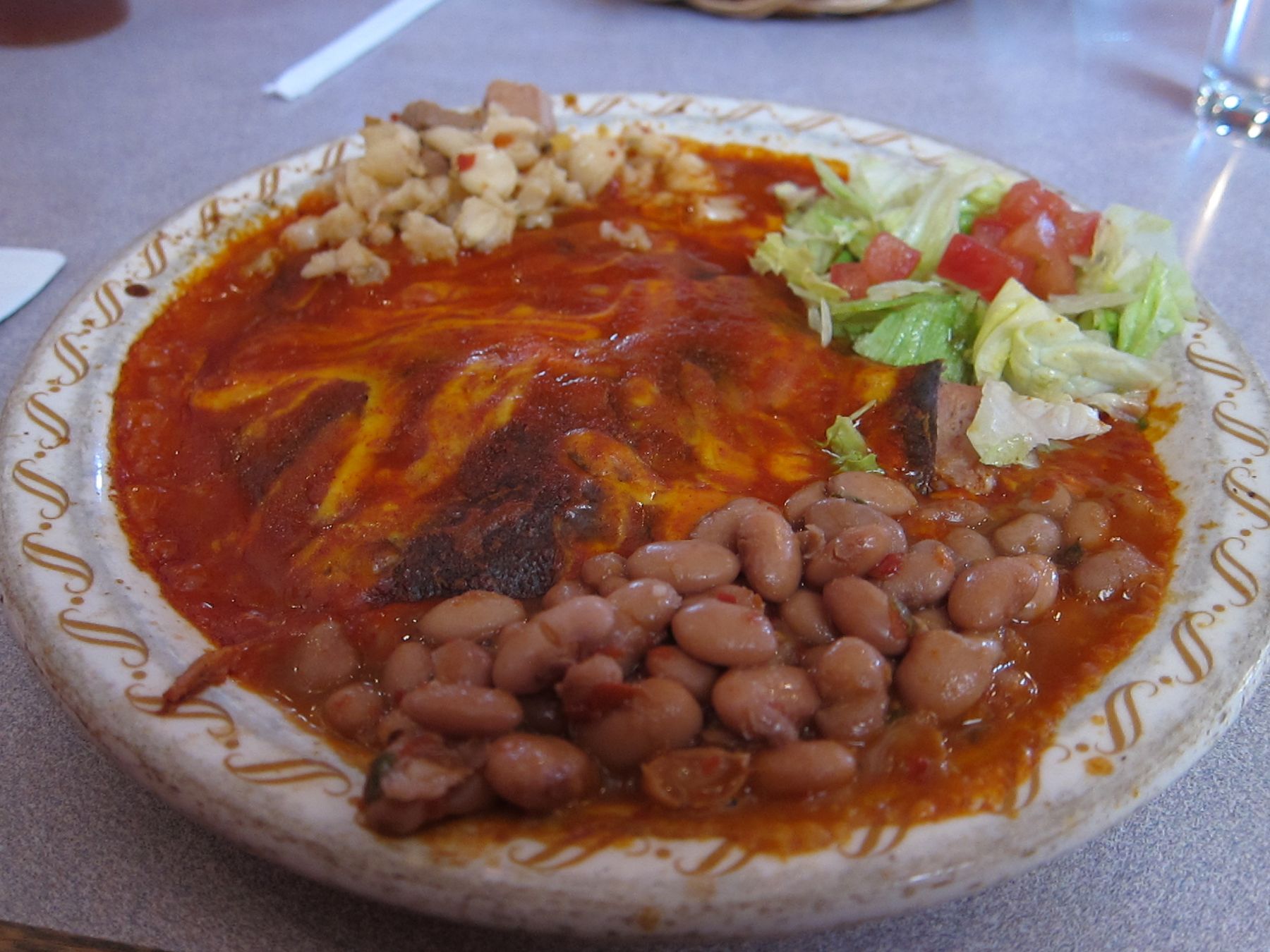
- Smothered: covered in chile sauce and usually melted cheese, as with a burrito served on a plate.
- On the side: the sauce comes in a bowl, a sensible choice if you are testing the heat.
- Stacked: enchiladas made with flat tortillas layered like a short stack of pancakes, rather than rolled, often topped with a fried egg.
- Chile con queso: melted cheese with green chile, served with chips.
Ask for plenty of water. Milk, rice and the bread on the table also calm a burning mouth better than iced tea or beer.
Dishes to look for
Menus vary from kitchen to kitchen, but certain dishes appear across the valley:
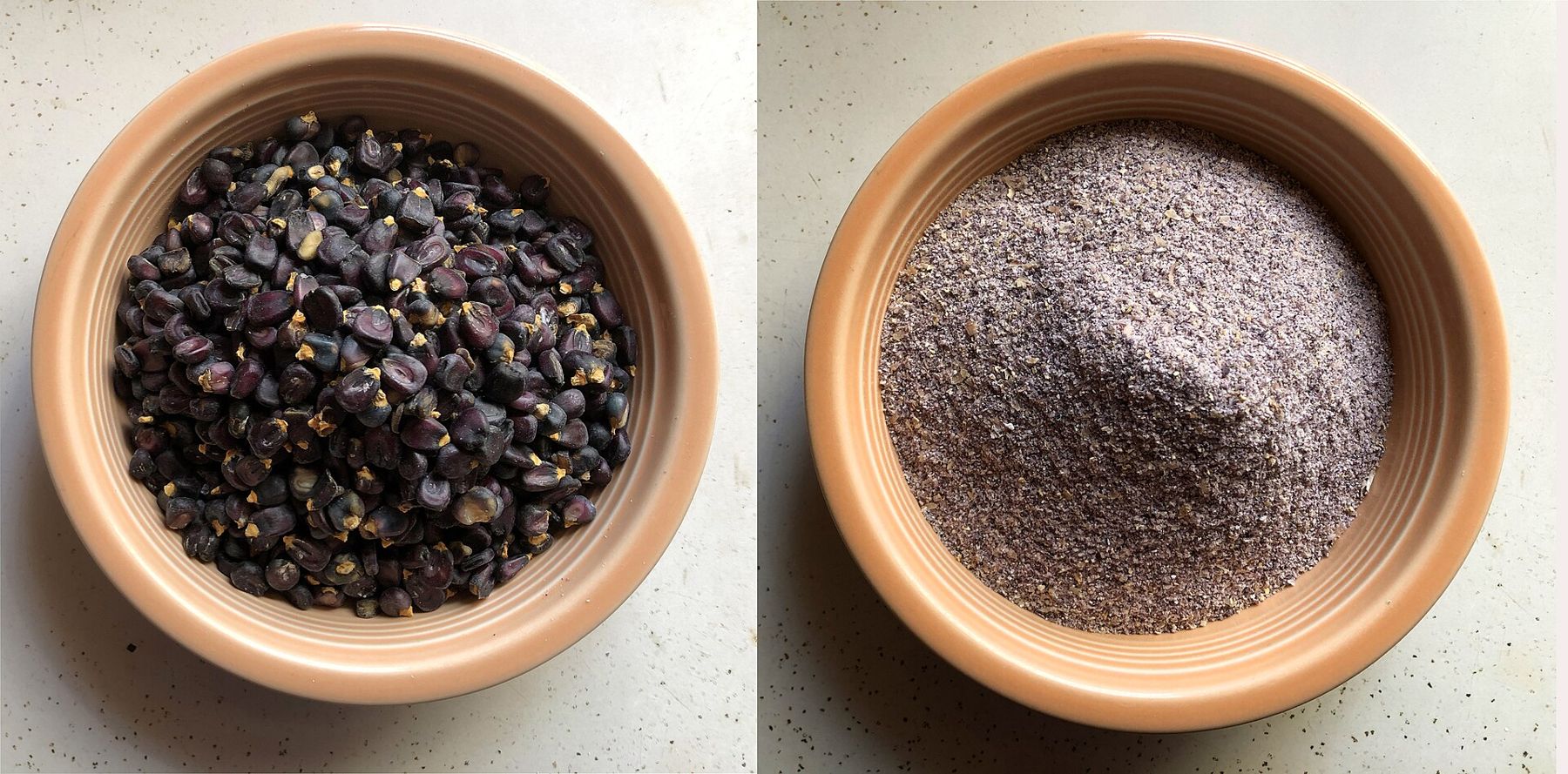
- Enchiladas, rolled or stacked, filled with cheese, chicken or beef, and covered in red, green or both. Blue corn tortillas are a northern New Mexico tradition that is easy to find here too.
- Chile rellenos, whole green chiles stuffed with cheese, battered and fried.
- Carne adovada, pork slow-cooked in red chile until it falls apart.
- Green chile stew, a simple, warming bowl of chile, potatoes and meat.
- Posole, a stew of hominy, the big soft kernels of treated corn, usually with pork and red chile; it is a classic at Christmas and New Year.
- Calabacitas, squash sauteed with corn and green chile.
- Breakfast burritos, filled with eggs, potatoes and meat, eaten in the hand or smothered on a plate.
Pinto beans and rice usually come alongside. The state has even named chile and pinto beans its official vegetables, which tells you how seriously the subject is taken.
 Down another streetHatch and the chile harvest
Sopaipillas, biscochitos and something sweet
Many plates arrive with a basket of sopaipillas: squares of dough fried until they puff into hollow pillows. Tear off a corner, let the steam out, and pour honey inside. Some people eat them as bread with the meal, using them to mop up chile; others save them for the end. A stuffed sopaipilla, filled with meat and beans and smothered in chile, is a full meal on its own.
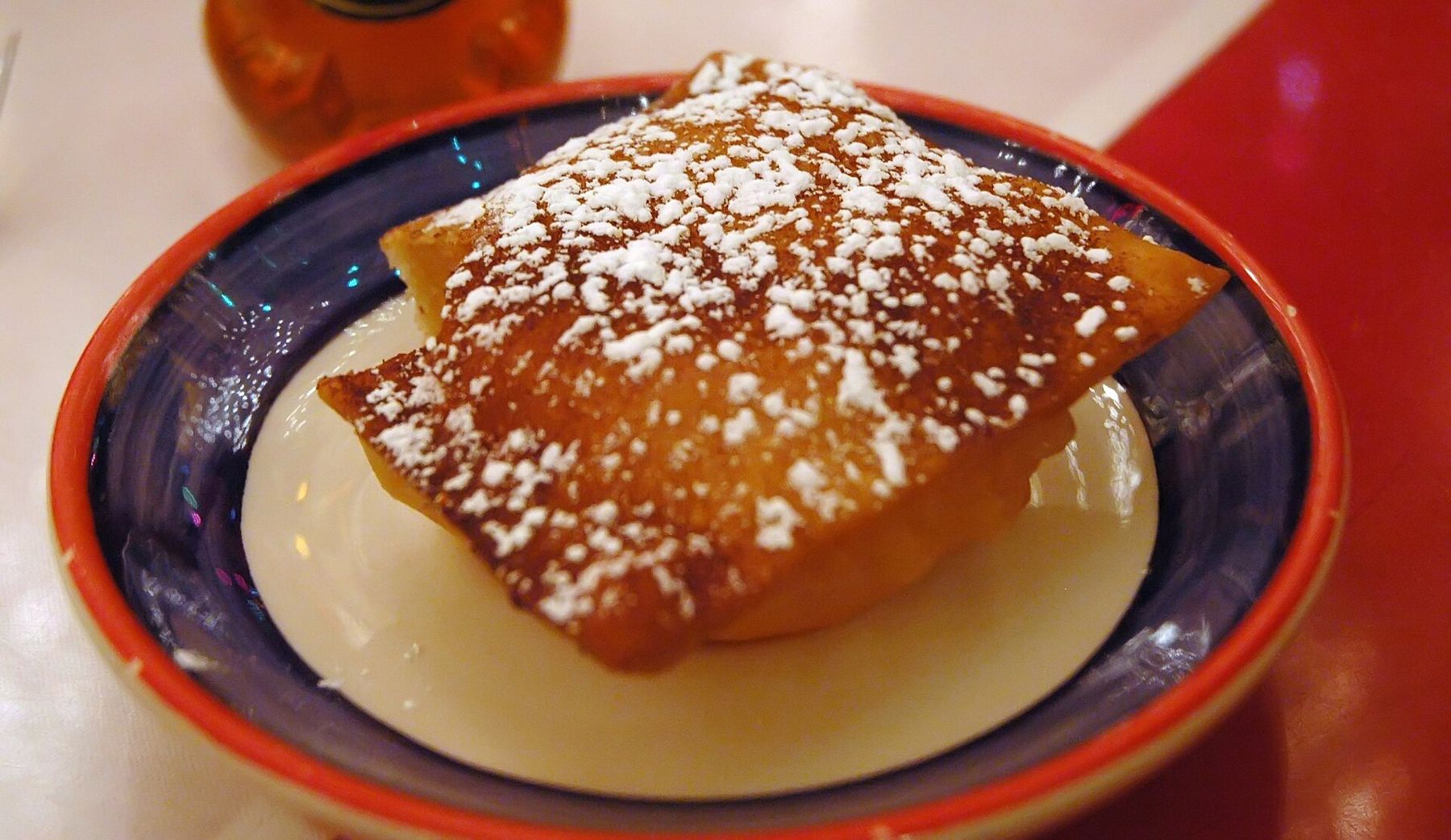
The biscochito, a crisp, crumbly cookie flavoured with anise and cinnamon, is New Mexico's official state cookie. It turns up at weddings, baptisms and above all at Christmas, when families bake them by the hundred. Look for them in bakeries and at the market described in Saturday at the Las Cruces farmers market. Natillas, a soft custard, and empanaditas, small sweet turnovers, are also common around the holidays.
It is not a question about salsa.
Where and when to eat
This guide names no restaurants, but the valley's New Mexican kitchens fall into a few easy types. There are old family places in adobe buildings around the Mesilla plaza, busy at weekends and full of visitors. There are plain neighbourhood cafes in Las Cruces, often with plain laminate tables and a breakfast crowd of regulars, where the chile tends to be the real thing. There are drive-through stands for breakfast burritos wrapped in foil, eaten in the car on the way to the mountains. And there are food stalls at markets and festivals.
Breakfast is taken seriously. Many places serve eggs, potatoes and chile from early morning, and a smothered breakfast burrito before a hike will keep you going until mid-afternoon. Lunch is often the main meal for workers in town, so popular cafes fill up around noon. Some older kitchens close early in the afternoon or on certain days of the week; check hours before you drive out for a particular plate.
Portions are large and the food is filling. Sharing a combination plate is a sensible way to taste several dishes at once, and nobody will mind if you ask for chile on the side.
Chile season and taking it home
From late summer into autumn, the valley smells of roasting chile. Big wire drums turn over propane flames outside groceries and roadside stands, and people buy green chile by the sack to roast, bag and freeze for the year ahead. If you are visiting then, it is worth stopping just for the smell and the sound of the crackling skins.
Taking chile home is easy. Dried red pods, powder and ristras travel well. Roasted green chile can be frozen and carried in a cooler, and many shops will ship it. If you are flying, check your airline's rules on food in luggage before you pack.
The most useful habit, though, is simply to keep asking the question. Try red at lunch and green at dinner, then try Christmas. Within a few days you will have an opinion, and like everyone else in the valley, you will be happy to share it. For the long history behind those plates, from the Camino Real to Mexican Mesilla, see how Mesilla changed countries.