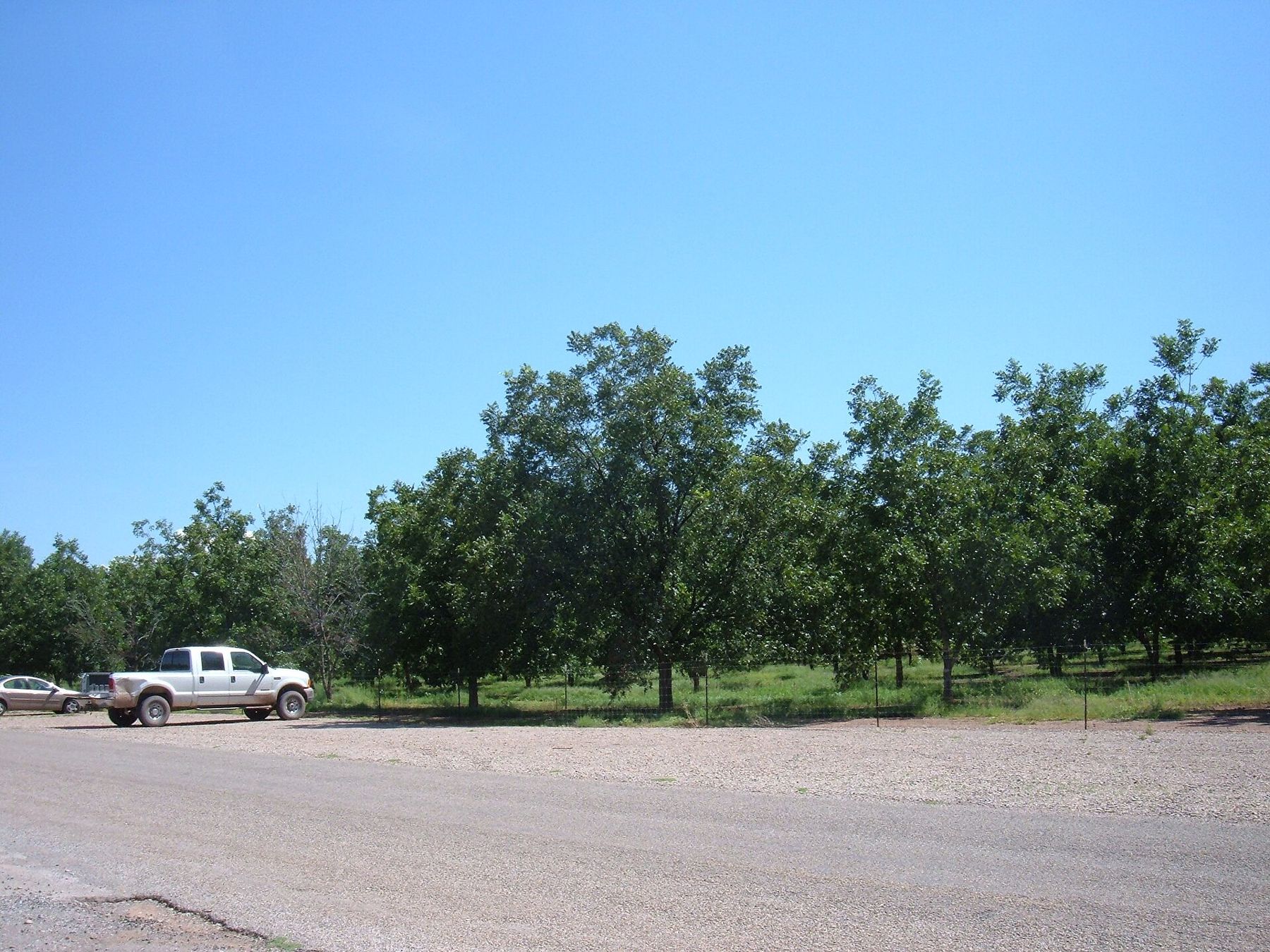
Drive south from Mesilla on NM 28 and the desert disappears. On both sides of the road, pecan trees stand in long, straight rows, so many and so even that the orchards seem to run to the horizon. In summer their canopies meet overhead in places and the road becomes a green tunnel; in winter the trees are bare and you can see down the rows for hundreds of yards.
The pecan is not native here. It comes from the river valleys of the south-central United States and northern Mexico. But it has done so well in the Mesilla Valley that New Mexico is now among the leading pecan producers in the country, and much of that crop grows in Doña Ana County, along the same stretch of the Rio Grande as Mesilla and Las Cruces.
How the orchards came to be
The valley has been farmed for centuries, first with crops watered from the river by acequias, community irrigation ditches, and later with cotton, chile, alfalfa and orchards. Pecans were planted on a growing scale through the twentieth century, once the dams upstream made irrigation water more reliable and growers learned how well the trees responded to the long, hot summers and the deep valley soil.
Pecan trees take years to bear a full crop and can live and produce for many decades, so an orchard is a long-term investment. Some of the trees you see on NM 28 were planted generations ago, and families have farmed the same land for a long time.
Flood irrigation and water
In spring and summer you may see an orchard flooded: water standing in a shallow sheet across the ground between the trees. This is flood irrigation, the traditional method here, using water delivered through the valley's network of canals and ditches. It looks extravagant in a desert, and pecans do use a great deal of water.
That makes them part of a constant conversation in the valley about water, especially in drought years when river releases are short and farmers turn to groundwater from wells. Some growers have moved to more efficient methods. It is worth knowing when you admire the shade that the shade has a cost.
 Down another streetWalking the Rio Grande bosque
Through the seasons
- Spring: leaves come out late compared with many trees, often not until April, and the orchards turn from grey to fresh green.
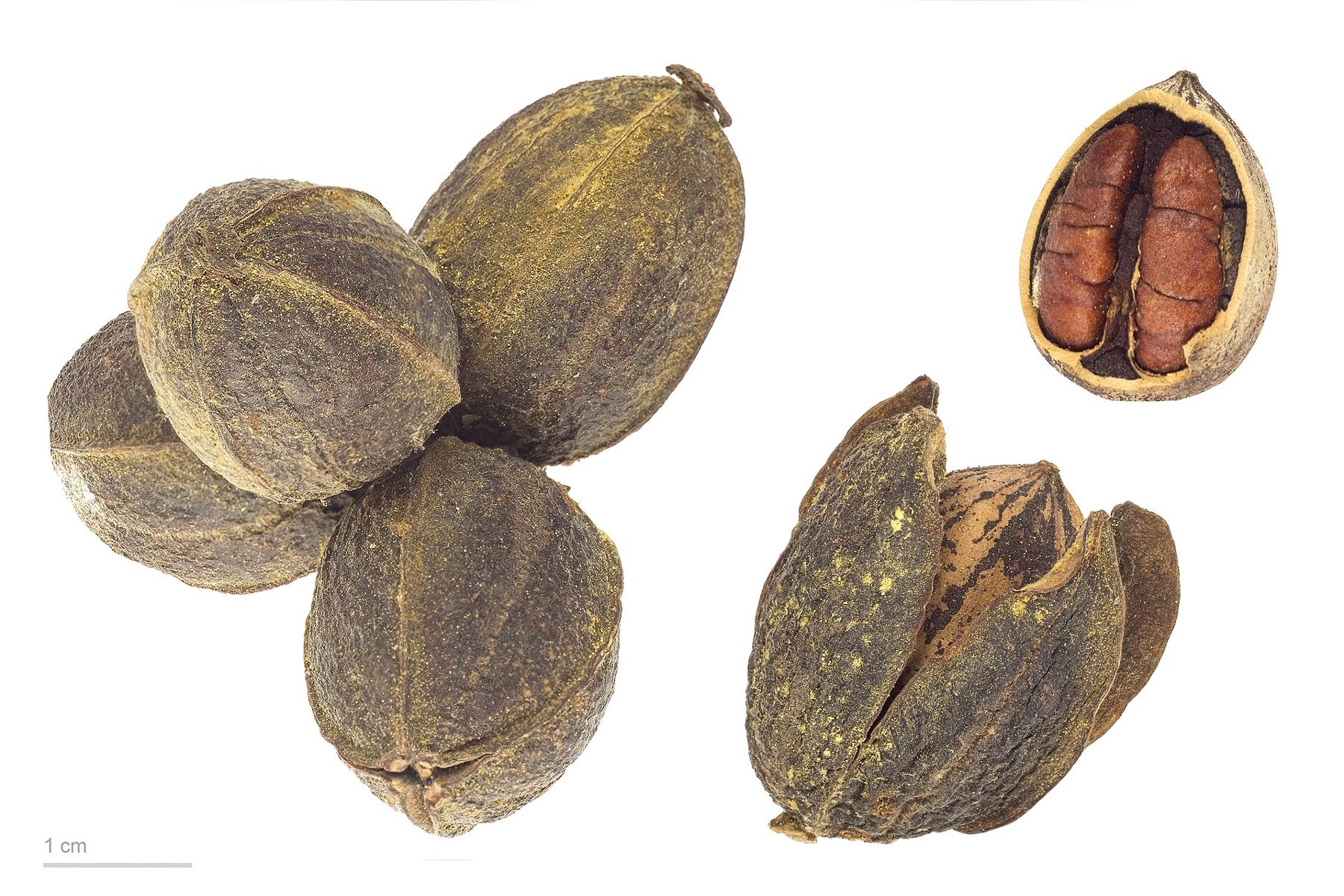
- Summer: full, deep shade, sometimes standing water, and green nuts forming in their husks.
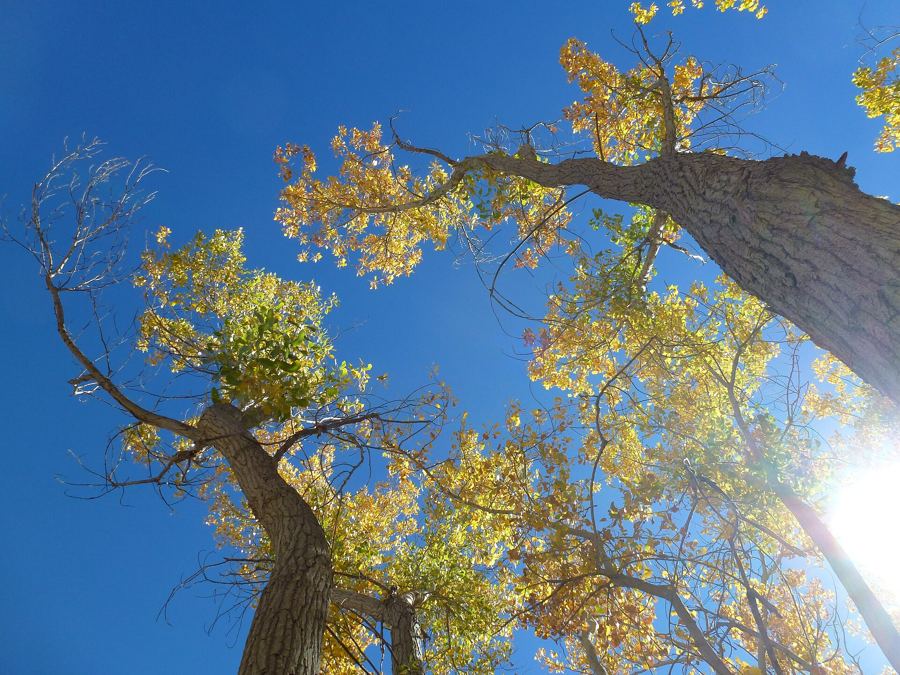
- Autumn: the husks begin to split, the leaves yellow and fall, and growers prepare for harvest.
- Winter: harvest, and bare trees with smooth grey bark under clear skies.
Summer is a good time to drive the orchards for the shade and the green light, especially early or late in the day. Winter is the time to see the work.
The orchards are also a good place to understand how the valley is laid out. The trees follow the flat, irrigated floor of the valley, and where the water stops, the orchards stop too. Look up from almost any row and you can see the line where green farmland meets bare desert slope, with the mesa on one side and the mountains on the other.
The harvest
Harvest usually runs from around late November into January, depending on the weather and the year. Machines do most of the work. A tree shaker clamps onto the trunk and shakes it hard for a few seconds, and the nuts rain down. Sweepers then push the fallen nuts into rows, and harvesters pick them up off the ground, along with leaves and twigs that are later cleaned out. The dust and noise carry across the valley on still days.
You can watch from the public road, but stay off the orchard floors. These are working farms, the machinery is heavy, and picking up nuts from the ground is taking the farmer's crop.
Buying and eating pecans
In season, pecans are sold all over the valley, in shells or shelled, raw or roasted, plain, salted, spiced or coated in chocolate or chile. Stands, shops and the Saturday market in Las Cruces all carry them. New-crop pecans in winter are the freshest; stored in the freezer, shelled pecans keep their flavor for many months.
Pecans appear in a lot of local baking: pies, pralines, brittle, and sometimes in biscochitos or mixed into holiday breads. They also turn up in savory dishes, toasted over salads or crusted on meat. For more on the food of the region, read about eating in the Mesilla Valley.
Driving NM 28
NM 28 runs south from Mesilla through the orchards toward small farming communities such as San Miguel and La Mesa, and eventually toward the Texas line. The road is two lanes with farm traffic, tractors and harvest equipment in season. Drive patiently, pull well off if you stop, and never park blocking an orchard gate.
The same drive passes vineyards and wineries along the southern part of the valley, which makes it a natural half-day loop; see wine along the southern Rio Grande. Pecans are not only a Mesilla Valley crop: orchards also grow in other parts of southern New Mexico, including around La Luz in the Tularosa Basin.
Whatever the season, go slowly. The orchards reward a driver who is not in a hurry, with light falling through the rows and the Organ Mountains rising beyond the trees to the east.