Bosque is the Spanish word for woods, and in New Mexico it means something specific: the band of trees and thickets along the Rio Grande. In the north of the state, around Albuquerque, the bosque is a wide forest of tall cottonwoods. In the Mesilla Valley it is narrower and patchier, squeezed between levees, fields and towns. But it is still the greenest strip of land for miles, and a walk along it shows a side of the desert most visitors miss.
The best place to start is Mesilla Valley Bosque State Park, a few minutes from the Mesilla plaza on the west side of the river. There are also walking paths along the river and levees near Las Cruces.
A river that runs and stops
The first surprise for many visitors is that the river is sometimes not there. The Rio Grande through the Mesilla Valley is controlled by dams upstream, chiefly Elephant Butte and Caballo reservoirs. Water is released for farms during the irrigation season, which generally runs from spring into early autumn. Then the river flows, brown and fairly full, between its banks.
When the releases stop, the river shrinks to pools and a trickle and, often for months, a dry bed of pale sand. Walking out across the bed of the Rio Grande in winter is a strange and memorable experience. Do not do it when water is running: currents can be strong and the bottom soft, and releases can change the level without warning.
This seasonal rhythm shapes everything around the river, from the farms that depend on the water to the birds and plants along the banks.
Cottonwoods, willows and salt cedar
The signature tree of the bosque is the Rio Grande cottonwood, a broad, rough-barked tree that once lined the river in great numbers. Cottonwoods need floods to seed and grow, and with the river tamed by dams and levees, far fewer young trees take hold. In the Mesilla Valley you see them in scattered groves rather than continuous forest.
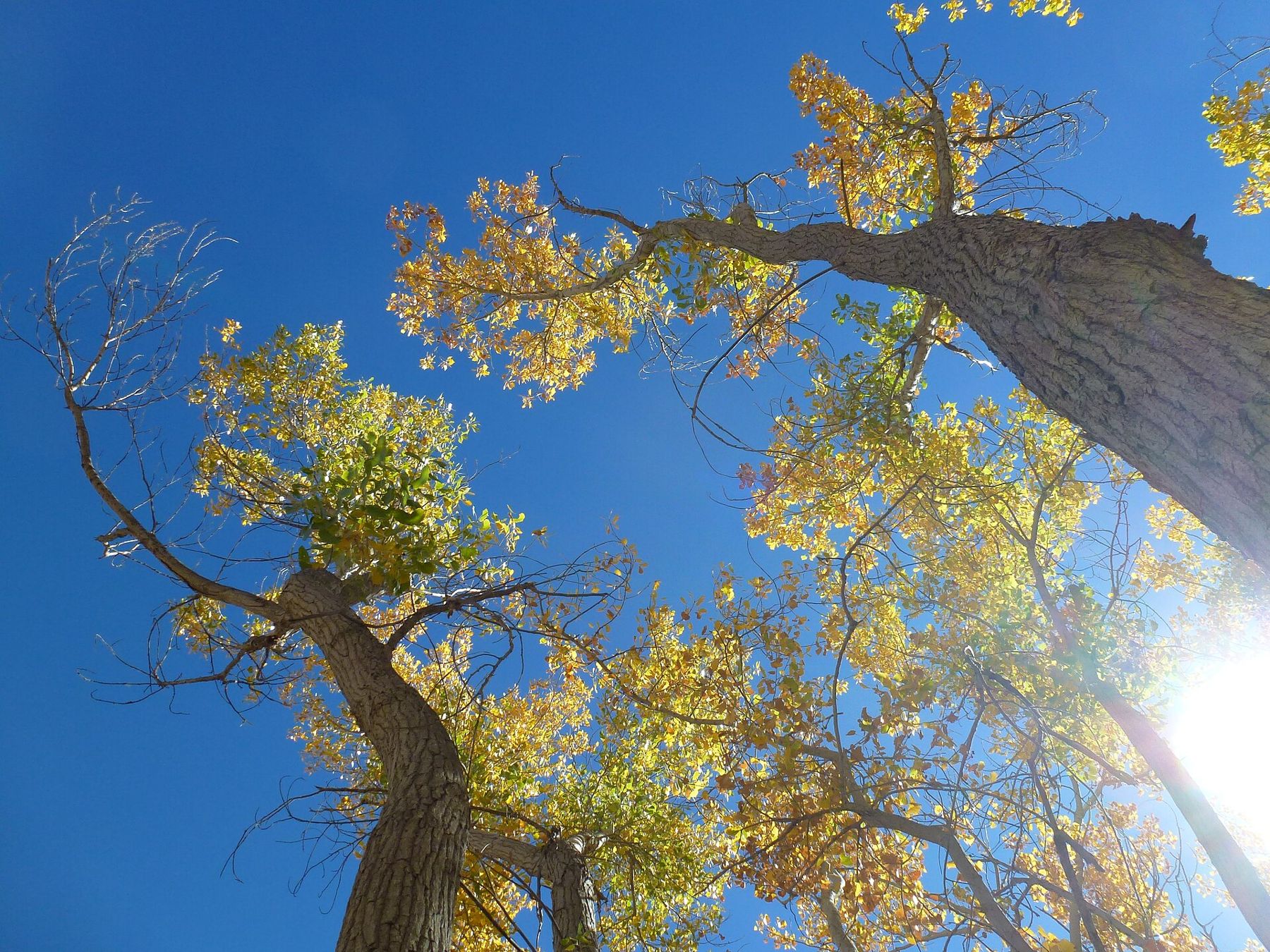
In autumn they are at their best. From late October into November the leaves turn a brilliant yellow, and against a deep blue desert sky the effect is striking. Stand under a grove at midday and look straight up: the light comes through the leaves as if they were stained glass, and the deeply furrowed trunks look older than they probably are.
Alongside the cottonwoods grow willows, screwbean and honey mesquite, and salt cedar, also called tamarisk, an introduced shrub that spread along southwestern rivers in the twentieth century and crowds out native plants. Restoration work in the region removes some salt cedar and plants native trees in its place.
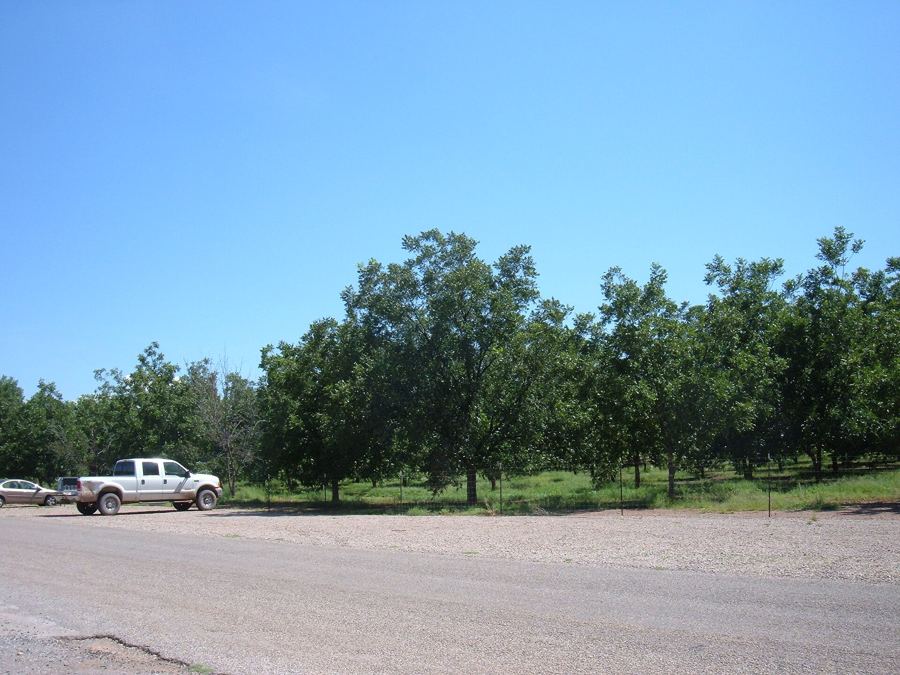 Down another streetThe pecan orchards of the Mesilla Valley
Mesilla Valley Bosque State Park
The state park protects a stretch of river and bosque southwest of Mesilla, with a visitor center, interpretive displays and a network of walking trails. Paths lead through mesquite and willow thickets, past wetland areas and along the river, with views of the sandy bluffs on the west side of the valley and the Organ Mountains to the east.
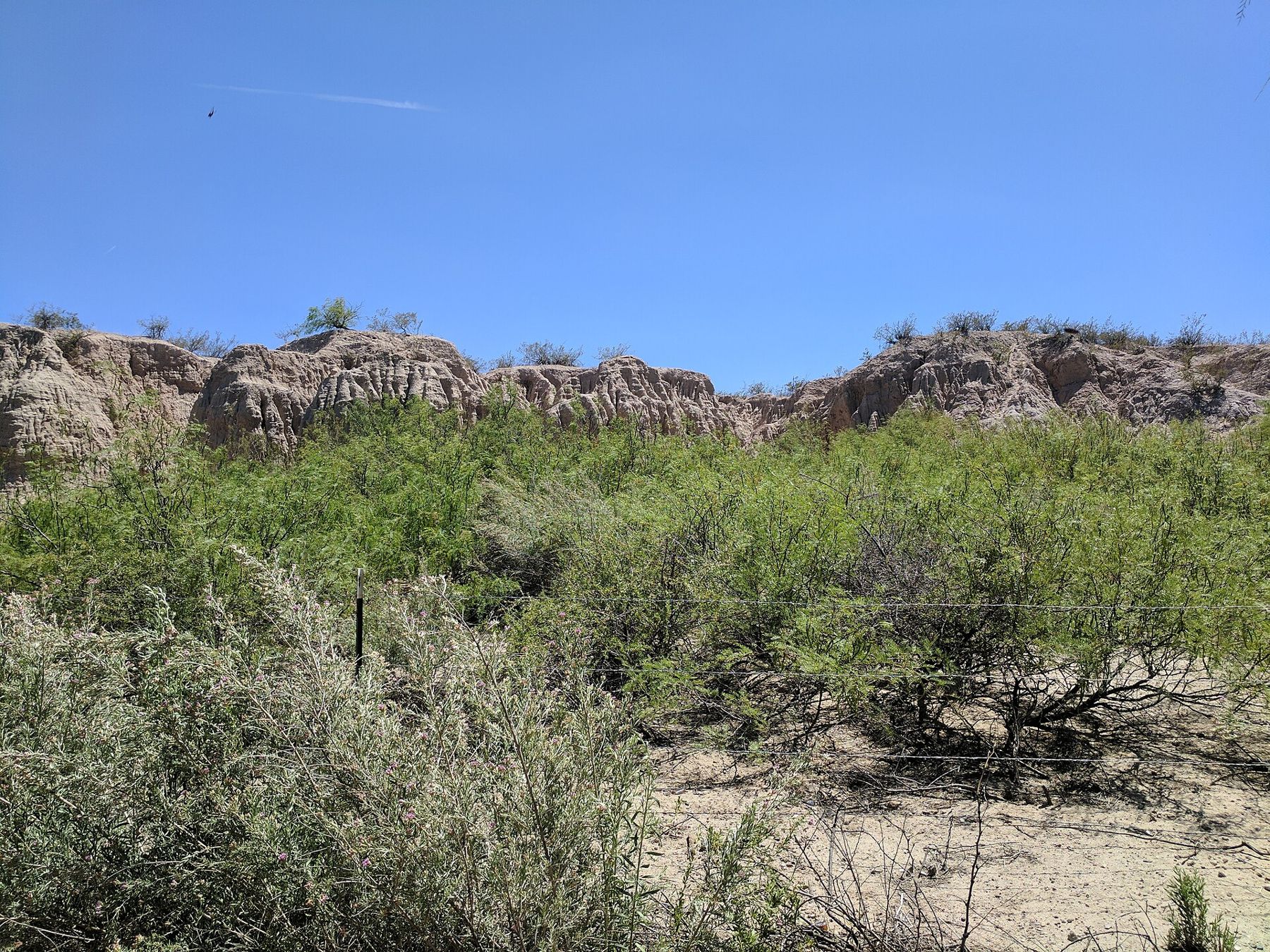
The trails are mostly flat and easy, on sand and packed earth. Some sections are open to the sun, so carry water in warm weather. Check current hours, fees and programs before you go; the park sometimes runs guided bird walks and nature programs, and opening times can change.
Birds of the river
For birdwatchers, the bosque is the richest habitat in the area. The mix of water, trees and thickets in otherwise dry country draws a wide range of species, both resident and migrating along the river.
- Year-round: roadrunners, Gambel's quail, great blue herons, red-tailed hawks, and many small songbirds in the thickets.
- Winter: ducks on the pools and ponds, sparrows in the brush, and sometimes sandhill cranes feeding in the fields nearby.
- Spring and autumn: migrating warblers, flycatchers and shorebirds passing along the river corridor.
- Summer: vermilion flycatchers and other desert-edge species, best seen early in the morning.
Early morning is the best time for birds in any season. Bring binoculars, walk slowly, and stop often; many birds give themselves away by sound before you see them.
Practical notes
From Mesilla, the state park is a short drive. River and levee paths near Las Cruces vary in access, and some levee roads are restricted, so follow posted signs. In summer, mosquitoes can be thick near water, and the heat is intense by late morning. In winter, mornings by the river can be well below freezing even when afternoons are mild.
Leave the plants, wildlife and the river bed as you find them. Do not light fires: the bosque is very flammable, and fires along southwestern rivers have destroyed large stretches of cottonwood.
Pairing the bosque with the valley
The river ties the whole Mesilla Valley together. A walk in the bosque fits easily into a morning with a stop at the Mesilla plaza, or a drive south along the pecan orchards and farms that the same water feeds. For wineries and vineyards along the southern river, see wine along the southern Rio Grande.
To understand why Mesilla stands where it does, on the west side of a river that has moved more than once, read how Mesilla changed countries. Then come back to the bosque at the end of a hot day, and listen to the birds settling in the cottonwoods.