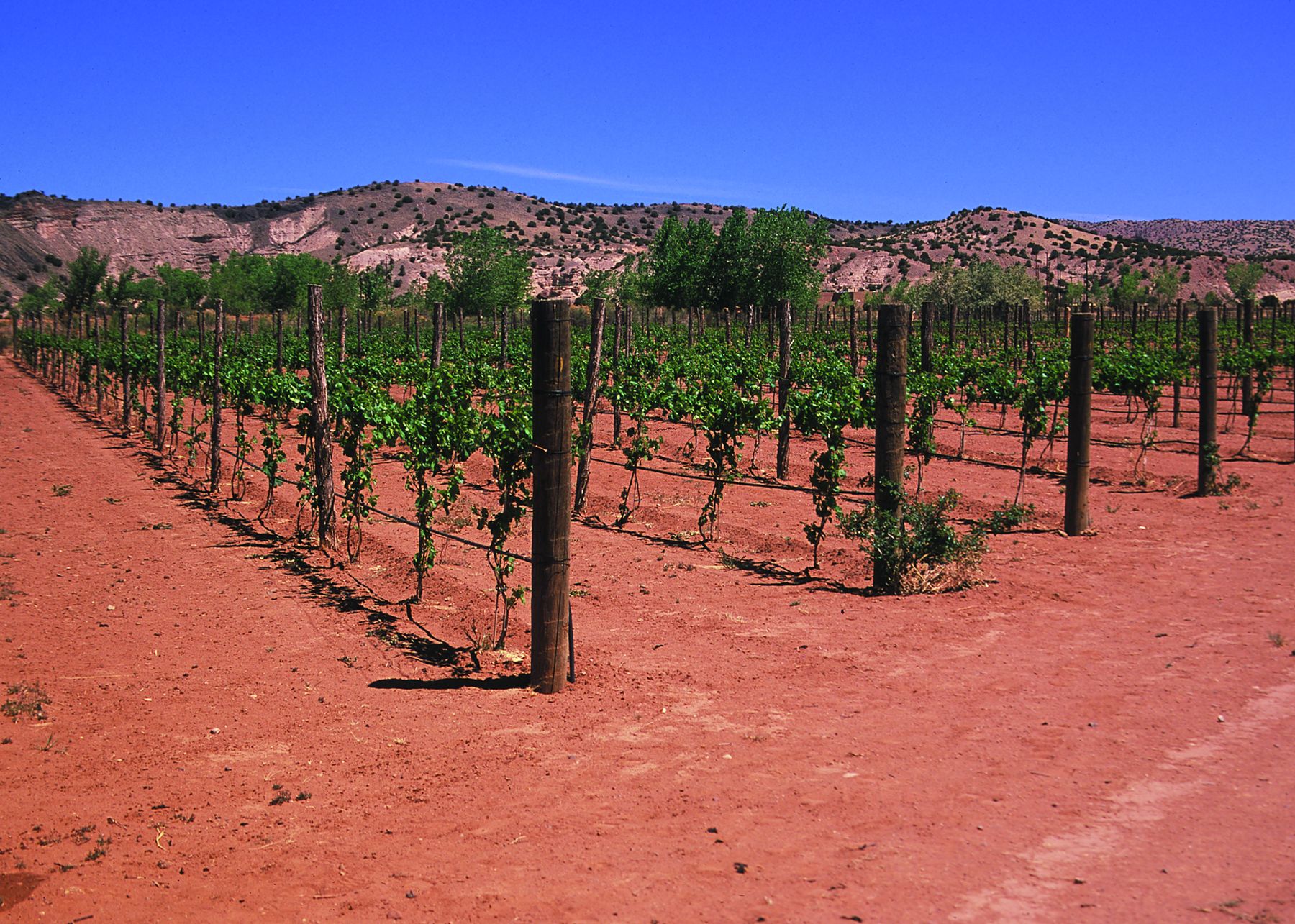
New Mexico likes to remind visitors that it was growing wine grapes long before California. The claim holds up. Franciscan friars planted vines along the Rio Grande in the early 1600s, because the Mass needs wine and the wagon road from Mexico City was far too long to haul it. The grape they planted is usually called the mission grape, a hardy, thin-skinned variety that also travelled to Texas, Arizona and later California. Some growers in the state still tend it, and a glass of it is a direct line back to those first mission gardens.
The Mesilla Valley, the green strip of farmland that runs south from the Selden Canyon past Las Cruces and Mesilla toward El Paso, is one of the places where that history comes back to life. It has its own federally recognised wine-growing area, and the valley's tasting rooms make a slow, easy afternoon out of Las Cruces.
A river vineyard in the desert
To understand wine here, start with water. The valley gets very little rain. What makes it green is the Rio Grande, or more exactly the network of canals and ditches that carries river water out to the fields during the irrigation season. Pecans, chile, onions, cotton and alfalfa all drink from the same system, and the vineyards take their share. When the irrigation season ends, the river through Las Cruces often shrinks to a sandy bed; the river's own story belongs to walking the Rio Grande bosque.
The climate does the rest. Days are long, hot and bright. Nights in the desert cool down quickly, even in summer, and that daily swing helps grapes keep some acidity while they ripen. Spring frosts and summer hail can still hurt a crop, and a wet monsoon in late summer brings its own problems, so every vintage is a little different.
Boom, flood and revival
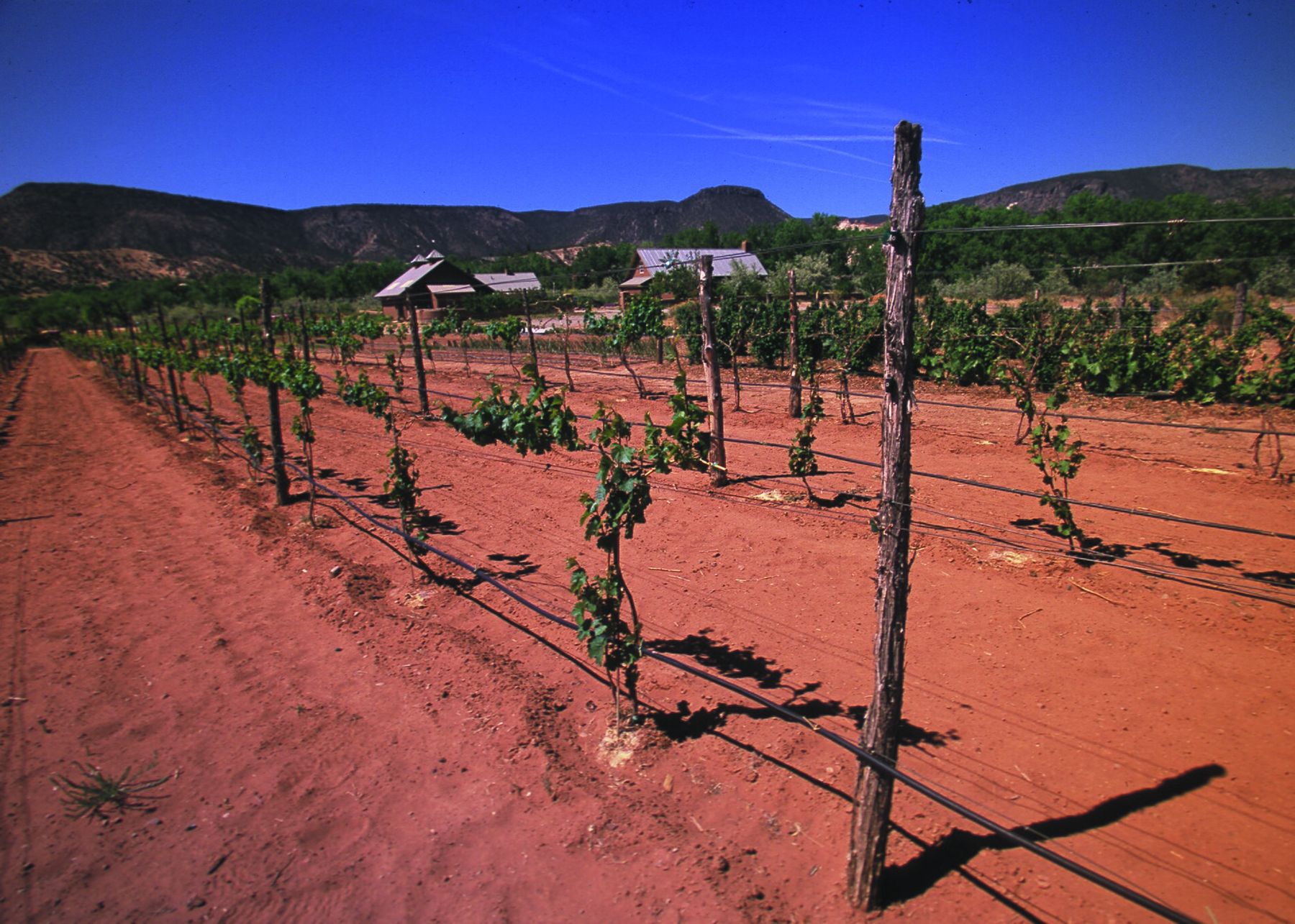
By the late 1800s New Mexico had a real wine industry, and much of it lay along the Rio Grande. Then came a run of setbacks. Big river floods damaged valley vineyards, and national Prohibition after 1920 shut down most of what was left. For decades, grapes in the valley were a curiosity rather than a crop.
The revival began in the late twentieth century, when new growers, some of them from Europe, tested which varieties could handle the heat and the alkaline soil. Today the state's wineries range from family operations with a few acres to larger producers with vineyards further west toward Deming, where the high desert gives more room. Some of the bottles you taste in the valley are made from grapes grown elsewhere in the state, which is normal here; ask, and staff will usually tell you where the fruit came from.
Tasting rooms in general
This guide names no individual wineries, but you will find tasting rooms in three kinds of places. A few sit out among the fields of the valley itself, reached by farm roads lined with orchards. Some occupy old adobe buildings in and around Mesilla, within walking distance of the plaza described in a day around the Mesilla plaza. Others are in Las Cruces, close to restaurants and the downtown streets.
Styles vary widely. Expect dry reds from grapes that like heat, crisp whites, sweet and semi-sweet wines that sell well locally, and the occasional wine flavoured with green chile, which is exactly what it sounds like. Opening days and hours change with the season, and some rooms open only from late in the week to Sunday. Check before you set out, and do not plan a route that relies on a single place being open.
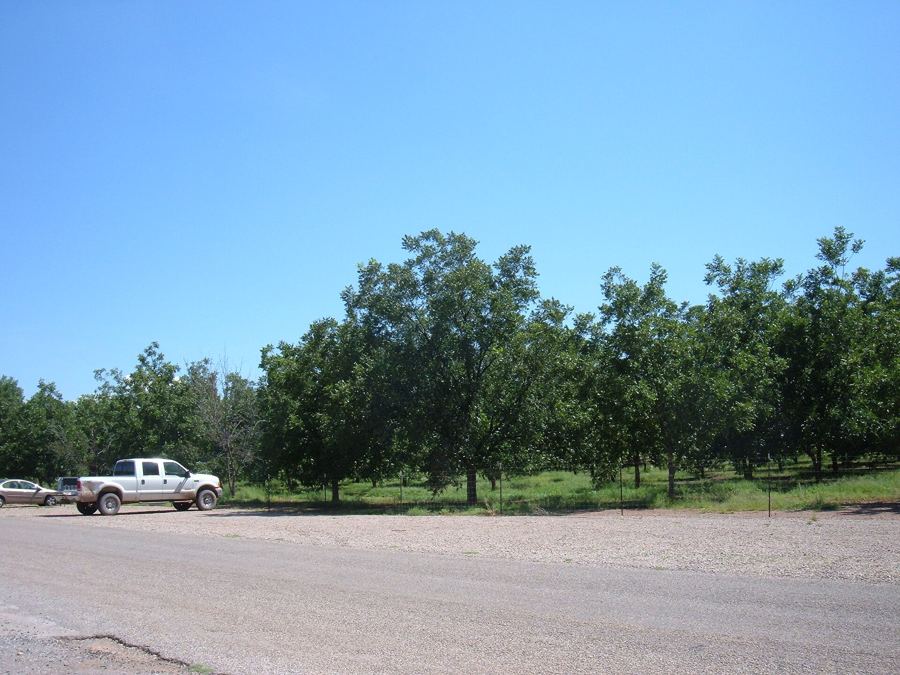 Down another streetThe pecan orchards of the Mesilla Valley
Harvest festivals and the calendar
Grape harvest in the valley usually starts in late summer and runs into early autumn, depending on the variety and the year. That is also when the valley smells of roasting chile and when the first cool mornings arrive, so it is a good time for a visit that takes in several kinds of farm. The harvest season for chile is covered in Hatch and the chile harvest.
Las Cruces has long hosted large wine festivals, one around Memorial Day weekend in late spring and another around Labor Day weekend at the end of summer, usually at the fairgrounds or a similar open site. They draw big crowds, with live music, food stalls and tasting tickets. Dates, venues and rules change, so look up the current details before planning a trip around one. Smaller events at individual wineries, such as grape stomps and harvest dinners, appear through the autumn.
Spring is the other pleasant season. The vines leaf out in April and May, the light is softer, and the heat has not yet settled in. Summer tasting is perfectly possible, but by early afternoon the temperature is often well into the nineties or higher, and the drive between rooms is hot.
Driving sensibly
The distances in the valley are short, but they are still driving distances. There is no wine train and very little public transport out to the farm roads, so somebody needs to stay sober. New Mexico treats drunk driving seriously, with checkpoints and stiff penalties, and the farm roads have their own hazards: narrow lanes, slow tractors, irrigation ditches close to the edge, and crossing livestock now and then.
- Choose one driver for the day and buy them lunch.
- Keep tastings small; most rooms pour modest measures, and two or three stops is plenty.
- Carry water and drink it between tastings, especially in the heat.
- Bring a cooler for bottles. A closed car in the sun can cook wine in an hour.
- Finish before dark if you are new to the valley roads, which are poorly lit.
Pairing a day out
A tasting afternoon fits easily with other parts of the valley. Start the morning at the river or among the pecan orchards while it is cool, have lunch in Mesilla or Las Cruces, then visit one or two tasting rooms in the warmest hours, when sitting in the shade with a glass makes sense. If you are eating New Mexican food, the classic advice is that a fruity, lightly chilled red or an off-dry white stands up to chile better than a heavy oaked wine; the food itself is described in red or green.
Buying a few bottles to take home is the best way to support the growers. If you are flying out of El Paso or Albuquerque, check your airline's rules on carrying wine in checked luggage and pack the bottles well, padded in clothing, with the cooler left behind.